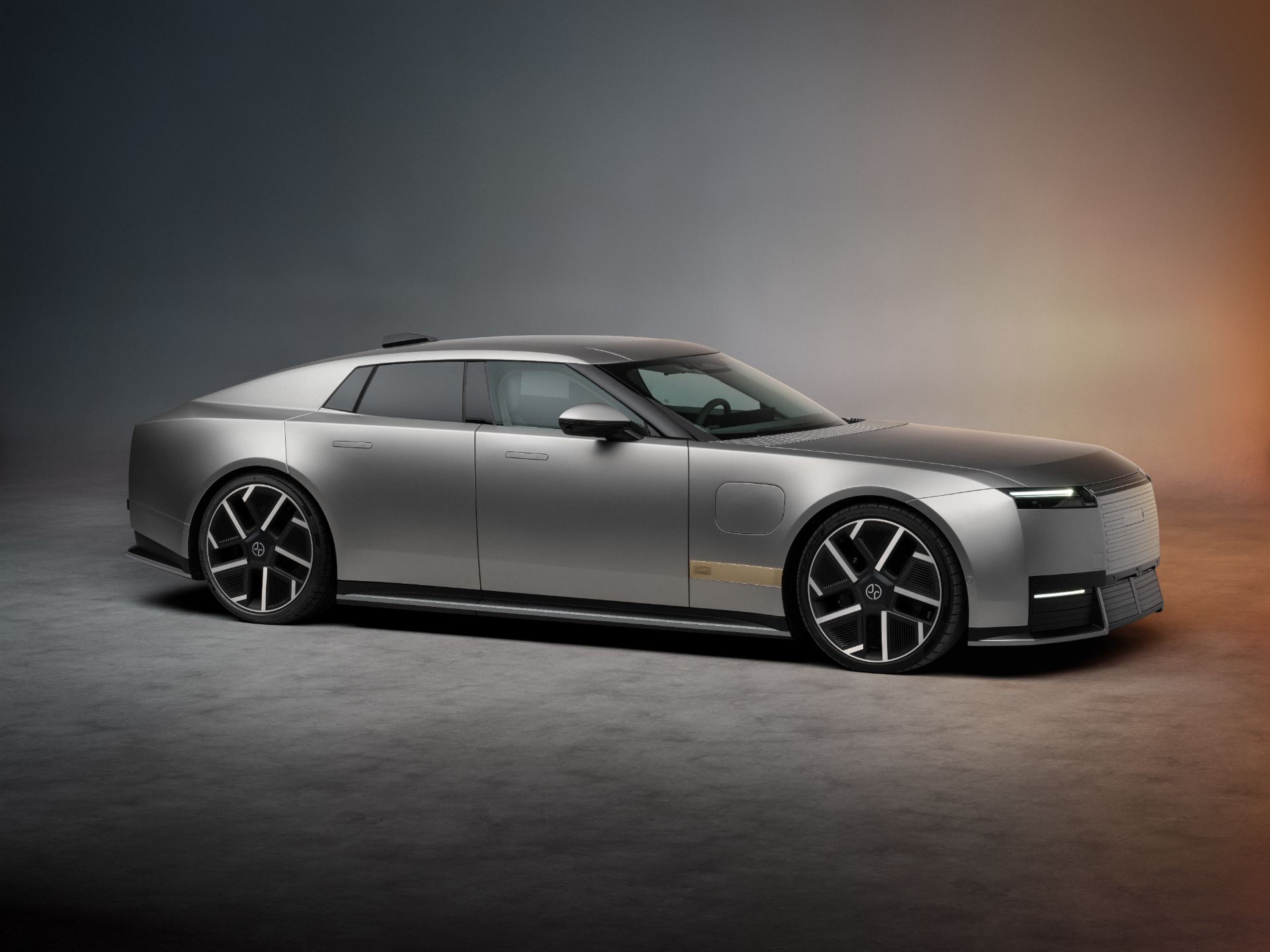
The Jaguar Type 01 starts at $130,500 in the United States and £130,000 in the UK, with order books opening in early 2027 and first deliveries due in the second half of that year. Jaguar unveiled the four-door electric grand tourer in New York on 6 October 2026, ending a sales blackout that has left showrooms without a new Jaguar for well over a year. It arrives as the most powerful road car the company has ever built: 1,015 hp, 1,007 lb-ft of torque and an anticipated range of up to 400 miles.
Context and Background
No car launch in recent memory has carried this much baggage. In November 2024 Jaguar released its "Copy Nothing" campaign — a film full of brightly dressed models and no car at all — and replaced the leaping cat with a flat wordmark. The backlash was immediate and global, and the Type 00 concept that followed in December 2024 drew its own share of criticism for proportions that looked closer to sculpture than showroom.
The commercial cost has been severe. Jaguar wound down its combustion range and paused new car sales in the UK and US while it rebuilt around electric power, leaving dealers with almost nothing to sell. European sales fell by about 97.5% in April 2025, to 49 cars. Analysts have pointed out that the collapse owes as much to the deliberate shutdown of petrol production — and to the cyberattack that disrupted JLR in 2025 — as to the marketing, but the effect is the same: Jaguar has spent two years as a brand with an identity and no product.
The Type 01 is the answer to that, and the name spells out the intent. "Type" nods to the E-type and the XJS, "0" stands for zero tailpipe emissions, and "1" marks the first of a new generation. It is the first production car built on the Jaguar Electric Architecture (JEA), a platform used by nothing else, and Jaguar filed more than 360 patent applications to get it built.
How Much Does the Jaguar Type 01 Cost?
The Type 01 carries a starting MSRP of $130,500 in the US and starts from £130,000 in the UK. That is a deliberate move upmarket: Jaguar managing director Rawdon Glover has said the brand's average US transaction price used to sit around $60,000 to $70,000, so the Type 01 roughly doubles it and repositions Jaguar away from BMW and Mercedes toward Porsche and Bentley territory. Jaguar has published the launch specification rather than a trim ladder, and quotes power as "up to" 1,015 hp, so detailed variant and options pricing should firm up closer to orders opening in early 2027.
Jaguar says more than 50,000 people have registered interest in the car, and that 78% of them have never owned a Jaguar. Those are expressions of interest rather than orders, reservations or deposits — Glover calls them "keep me informed" contacts — so they measure curiosity, not committed demand. The car will be built at Solihull from 2027, with motors and battery packs coming from Wolverhampton and body panels pressed at Halewood.
| Specification | Jaguar Type 01 |
|---|---|
| Starting price (US) | $130,500 MSRP |
| Starting price (UK) | £130,000 |
| Power | Up to 1,015 hp (1,030 PS) |
| Torque | 1,007 lb-ft (1,365 Nm) |
| Motors | Tri-motor — 260kW front, twin 310kW rear |
| 0-60 mph | 3.1 seconds |
| 62-112 mph | 4.0 seconds |
| Battery (usable) | 118 kWh lithium-ion, Jaguar NMC chemistry |
| Electrical architecture | 850 volts |
| Range | Up to 400 miles (Jaguar estimate) |
| Highway range at 75 mph | Up to 320 miles |
| DC fast charging | 350kW — 200 miles in 13 minutes, 10-80% in ~22 minutes |
| Length | 208 in (5,235 mm) |
| Wheels | 23-inch standard, 21-inch optional |
| Drag coefficient | 0.23 Cd |
| Orders open | Early 2027 |
Jaguar Type 01 Range, Battery and Charging
A usable 118 kWh lithium-ion pack with Jaguar's own NMC chemistry delivers an anticipated range of up to 400 miles, with up to 320 miles available at a sustained 75 mph. The 400-mile figure is Jaguar's own estimate rather than a confirmed EPA label, so treat it as provisional until the official rating lands. The 850-volt architecture supports 350kW DC charging, adding up to 200 miles in as little as 13 minutes and covering 10-80% in around 22 minutes. An intelligent split-charging function allows 250kW on a 400-volt charger, and the onboard AC charger handles up to 19.2kW.
US cars get NACS compatibility and access to the Supercharger network, with dual AC charge doors on both front fenders and DC charging through the passenger side. Jaguar's ThermAssist thermal supervisor shuttles heat between the battery, drive units and cabin, claiming up to 3.5kW of heating from every 1kW of recovered energy, and a patent-pending Inverter Deactivation function drops the car to single-axle drive while cruising — worth up to 18 extra miles. The battery is warrantied for eight years or 100,000 miles.
Exterior
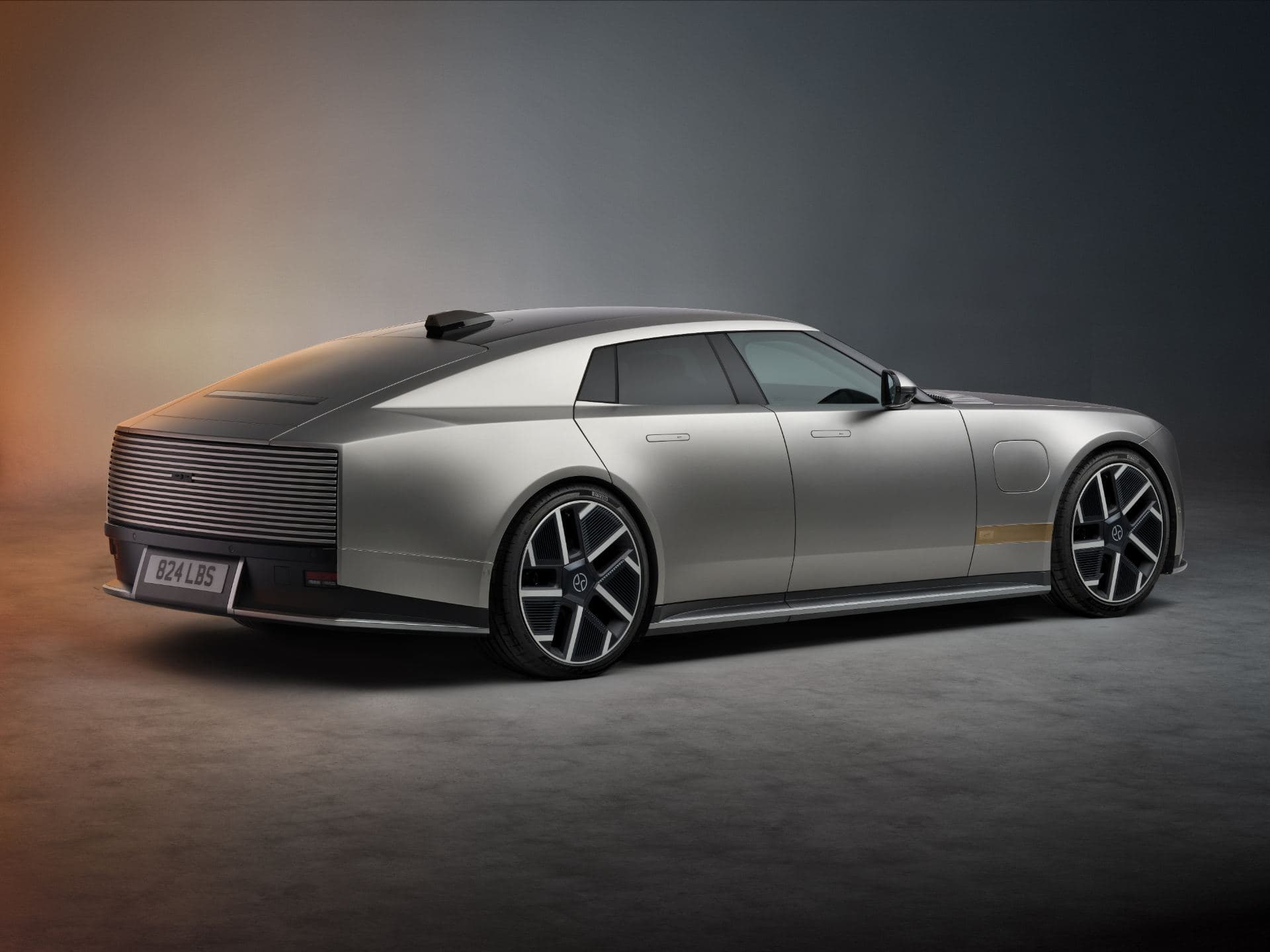
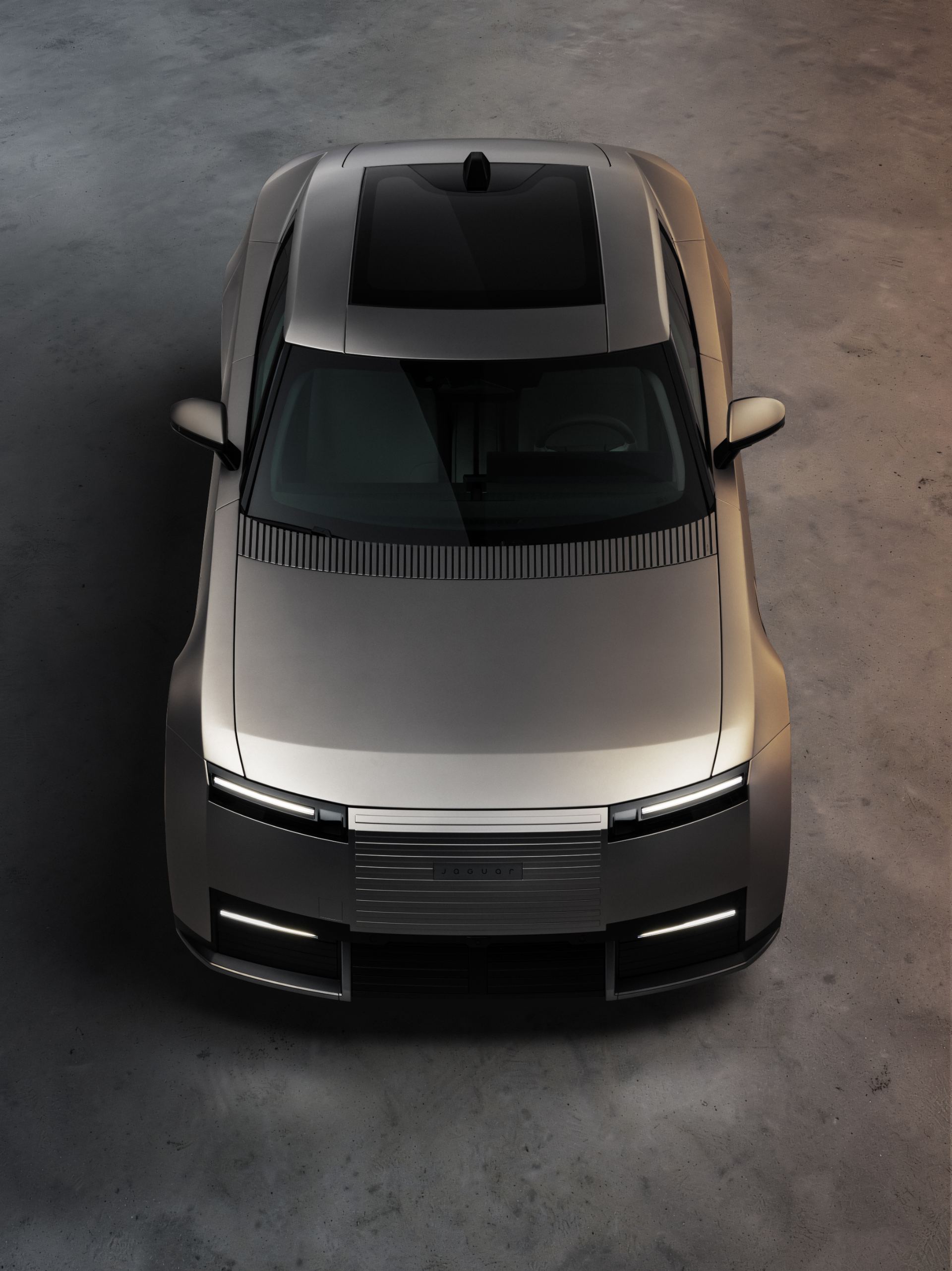
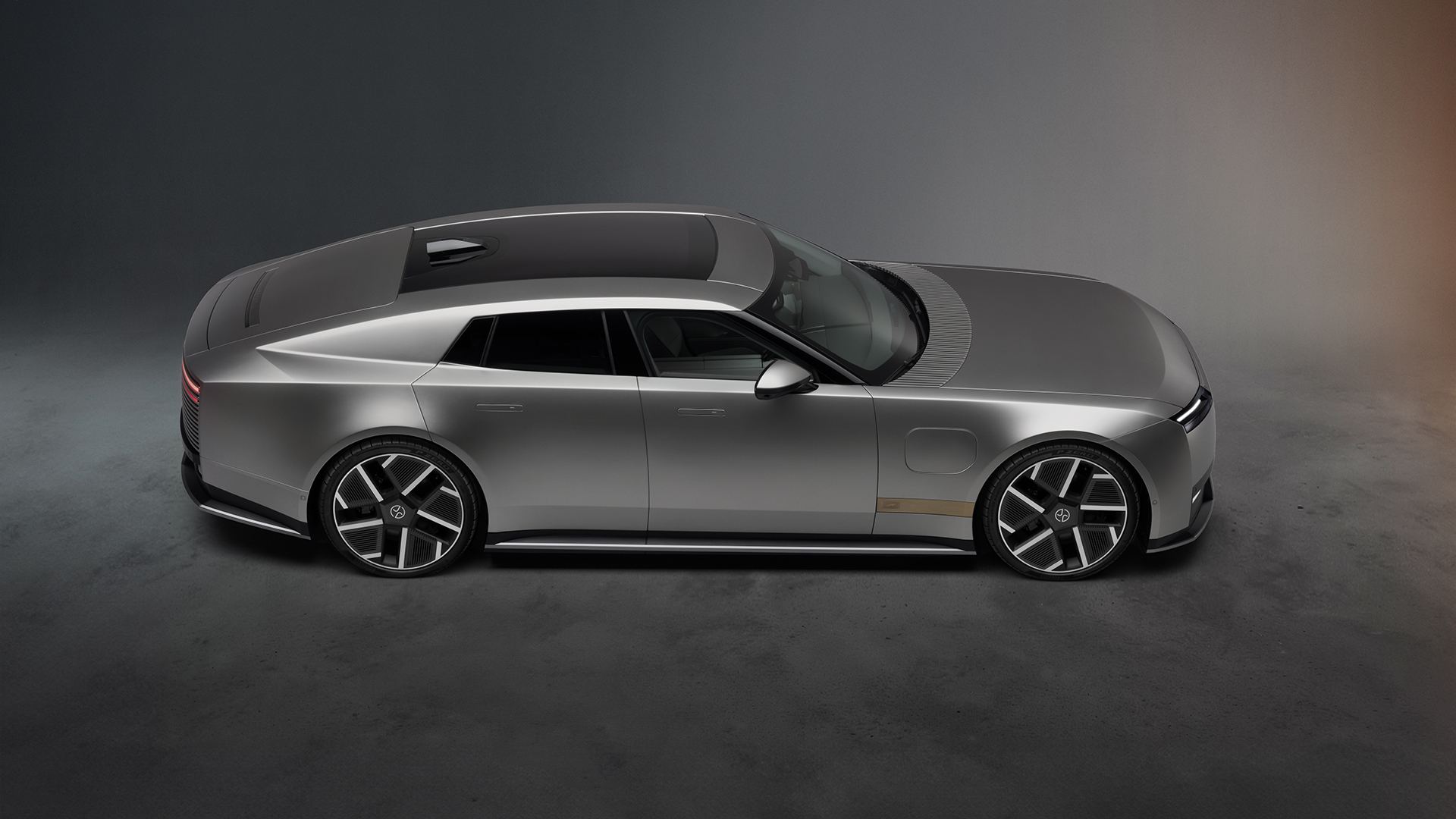
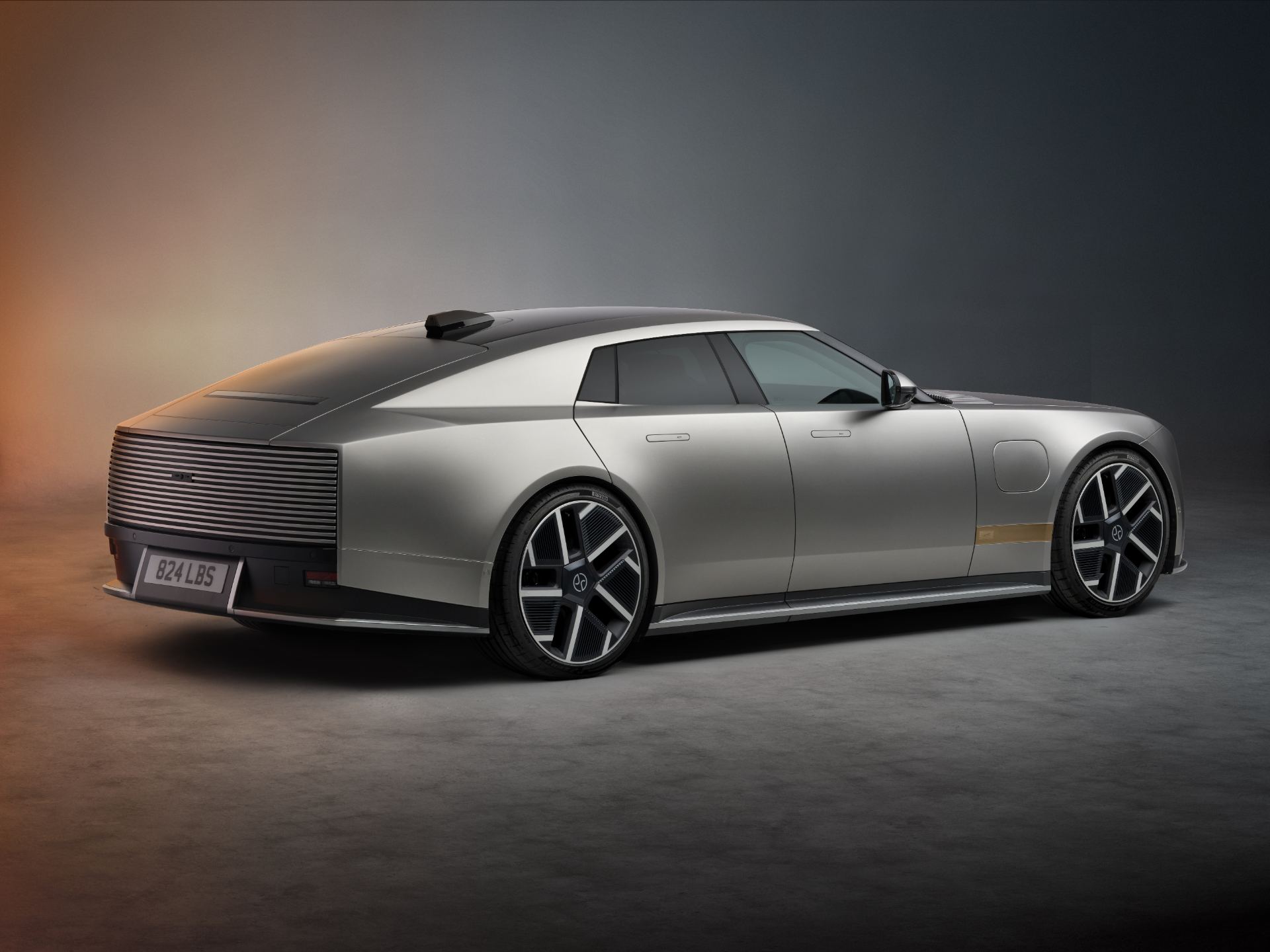
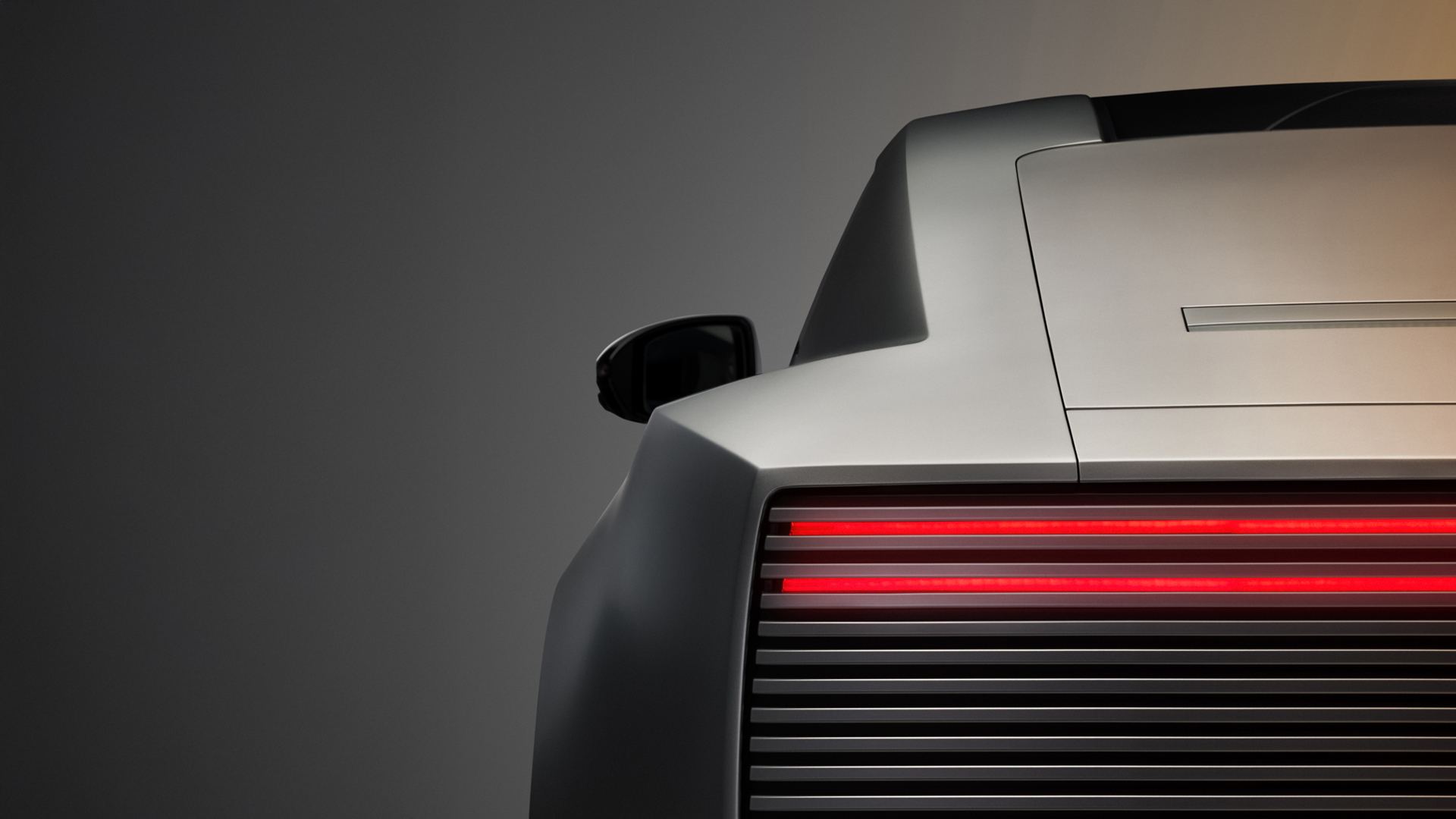
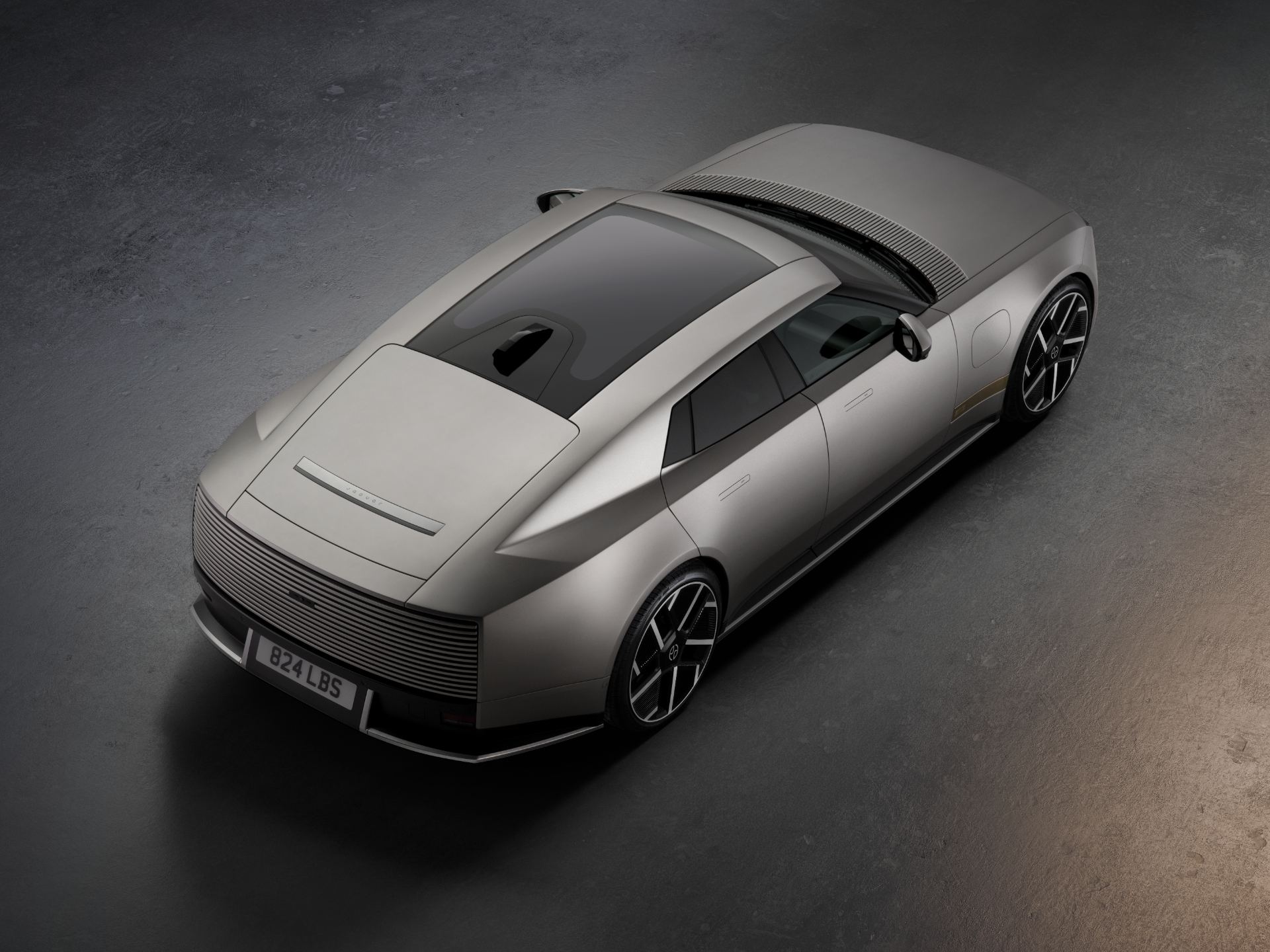
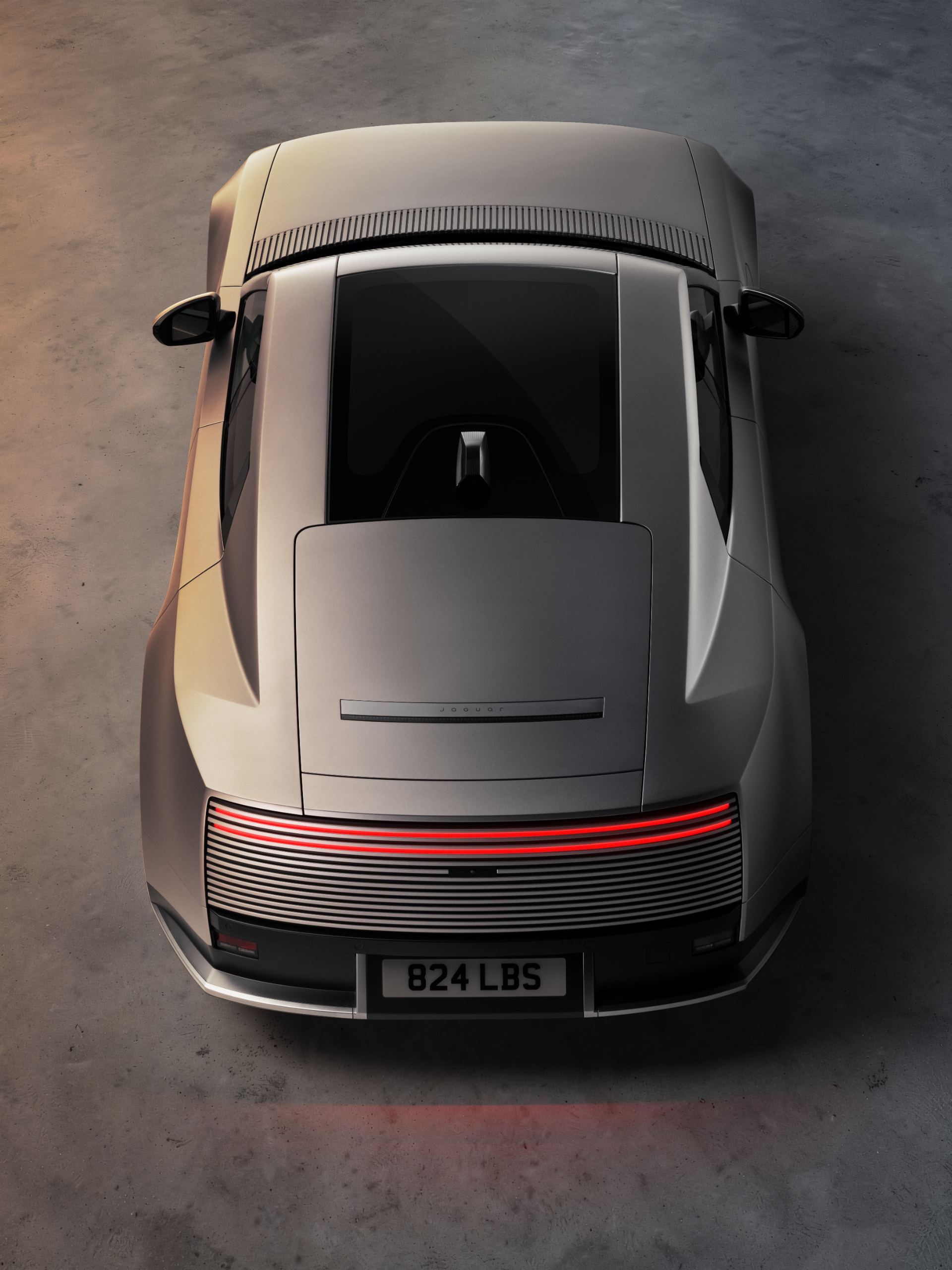
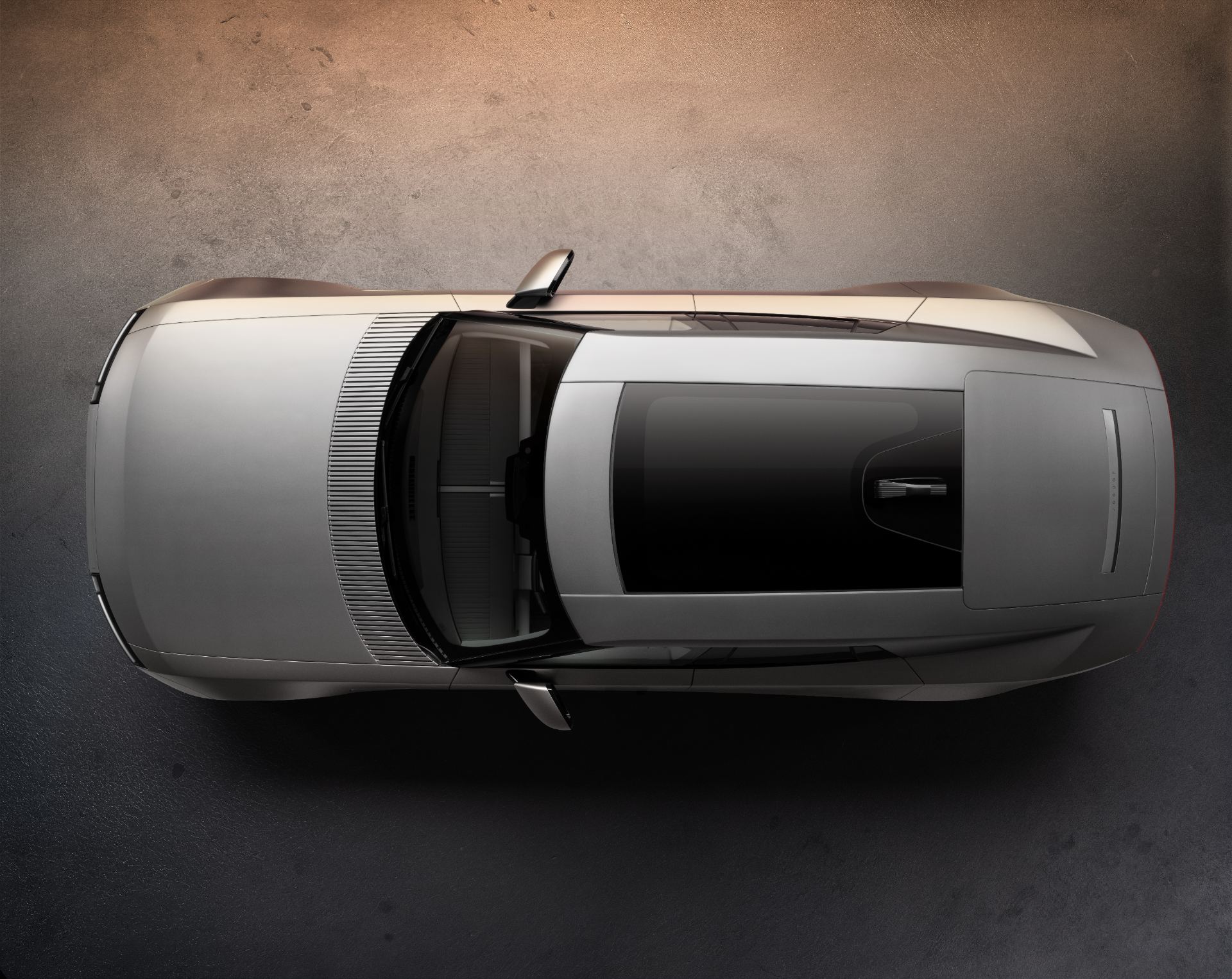
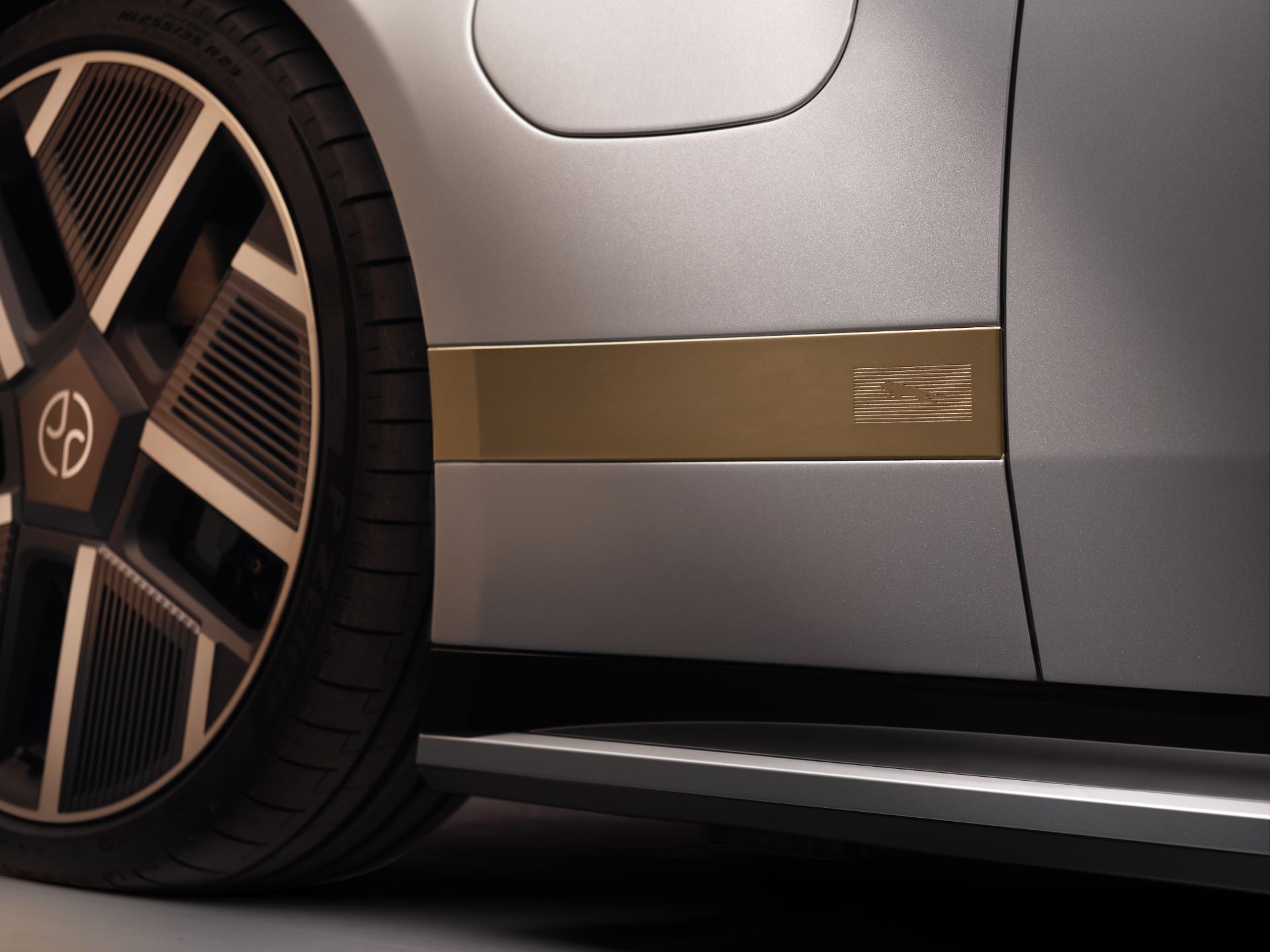
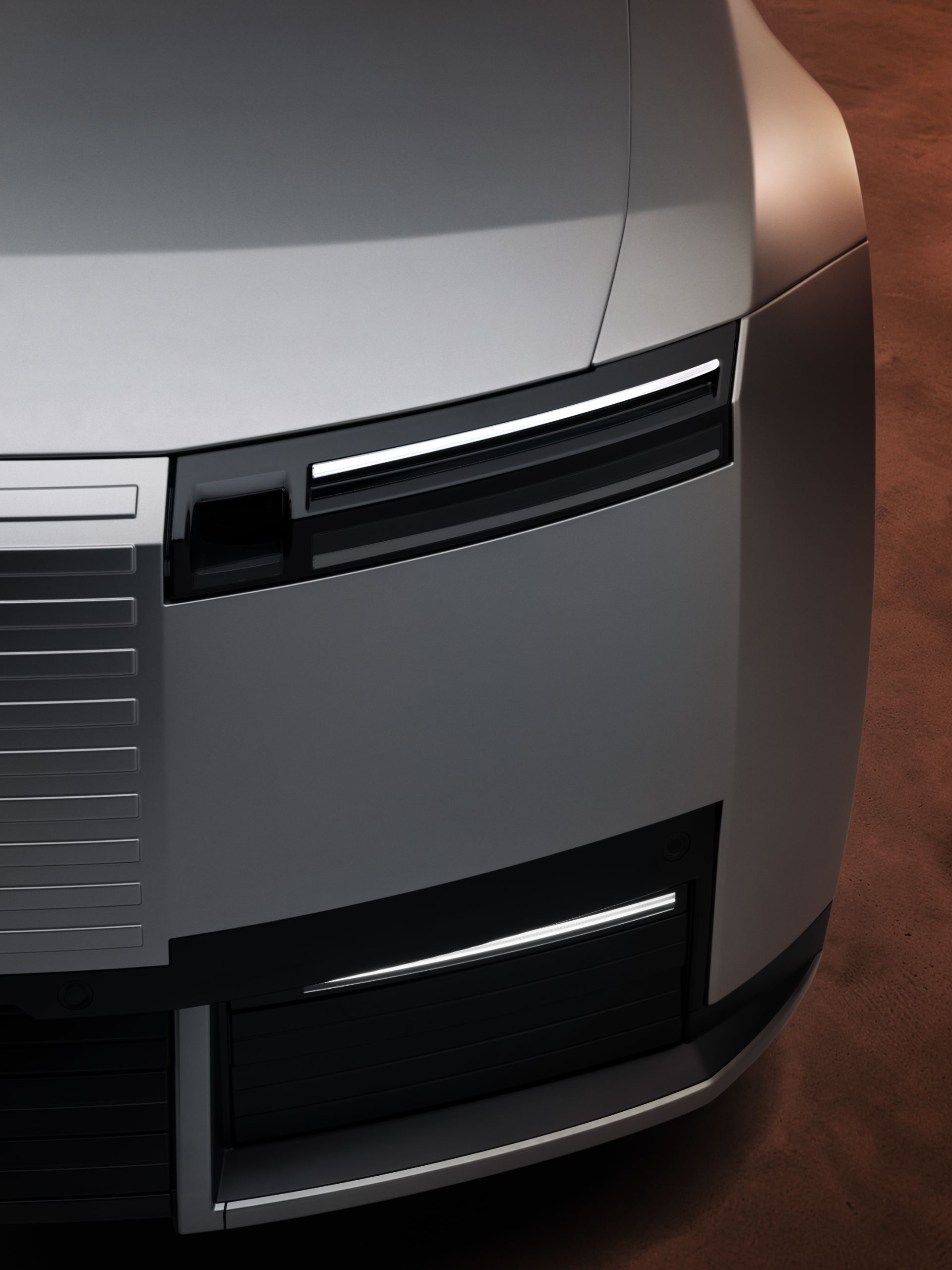
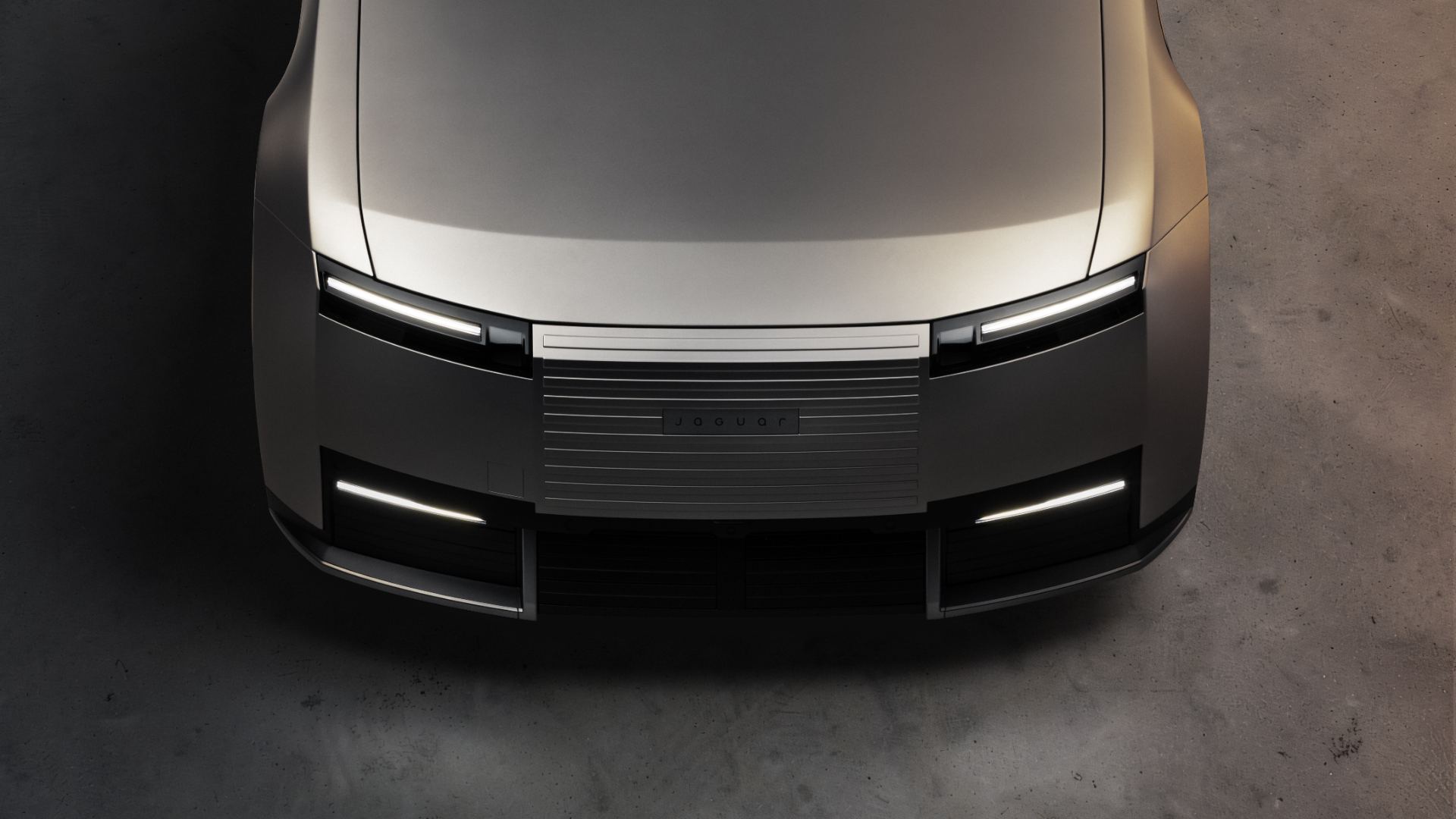
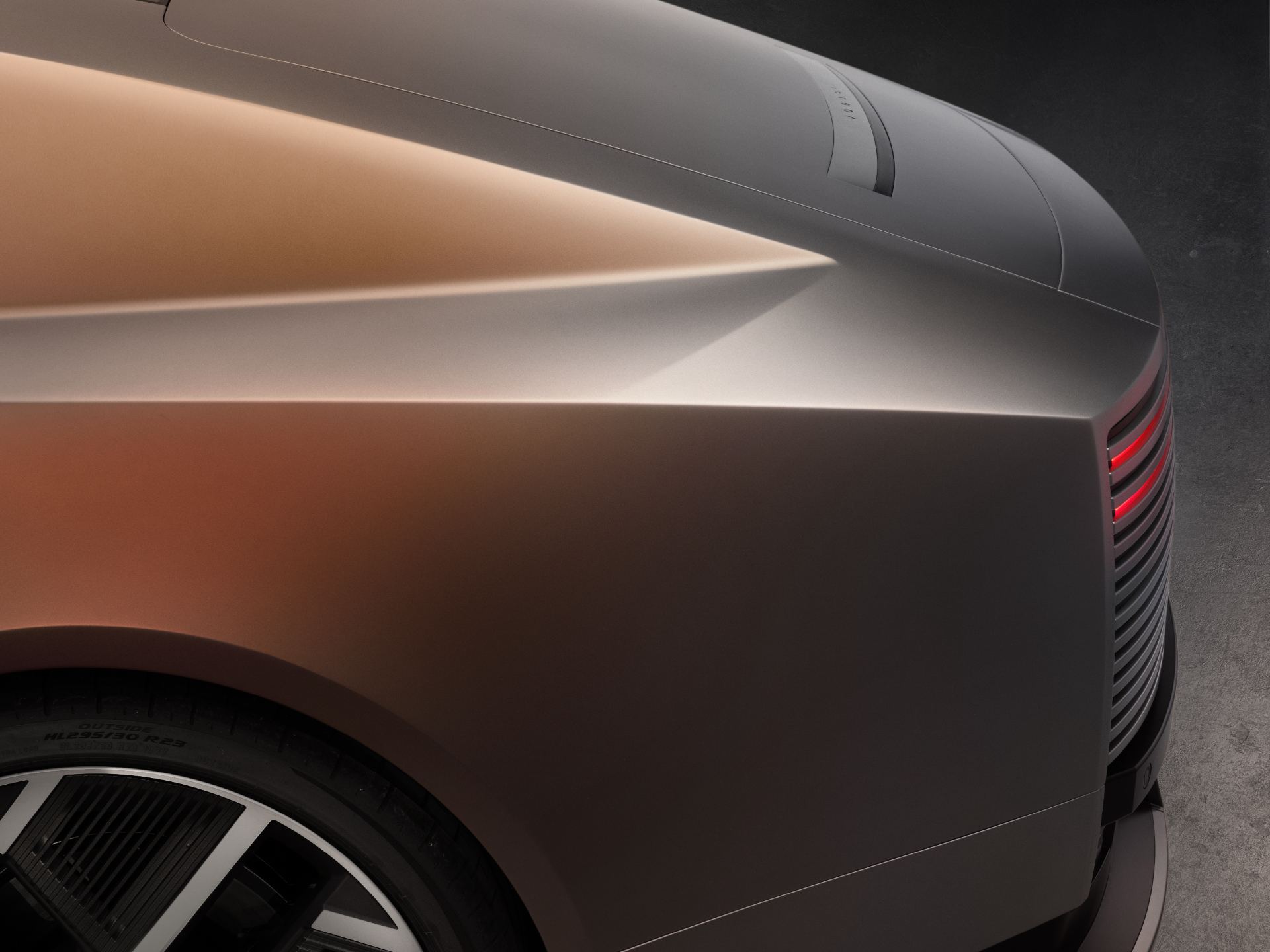
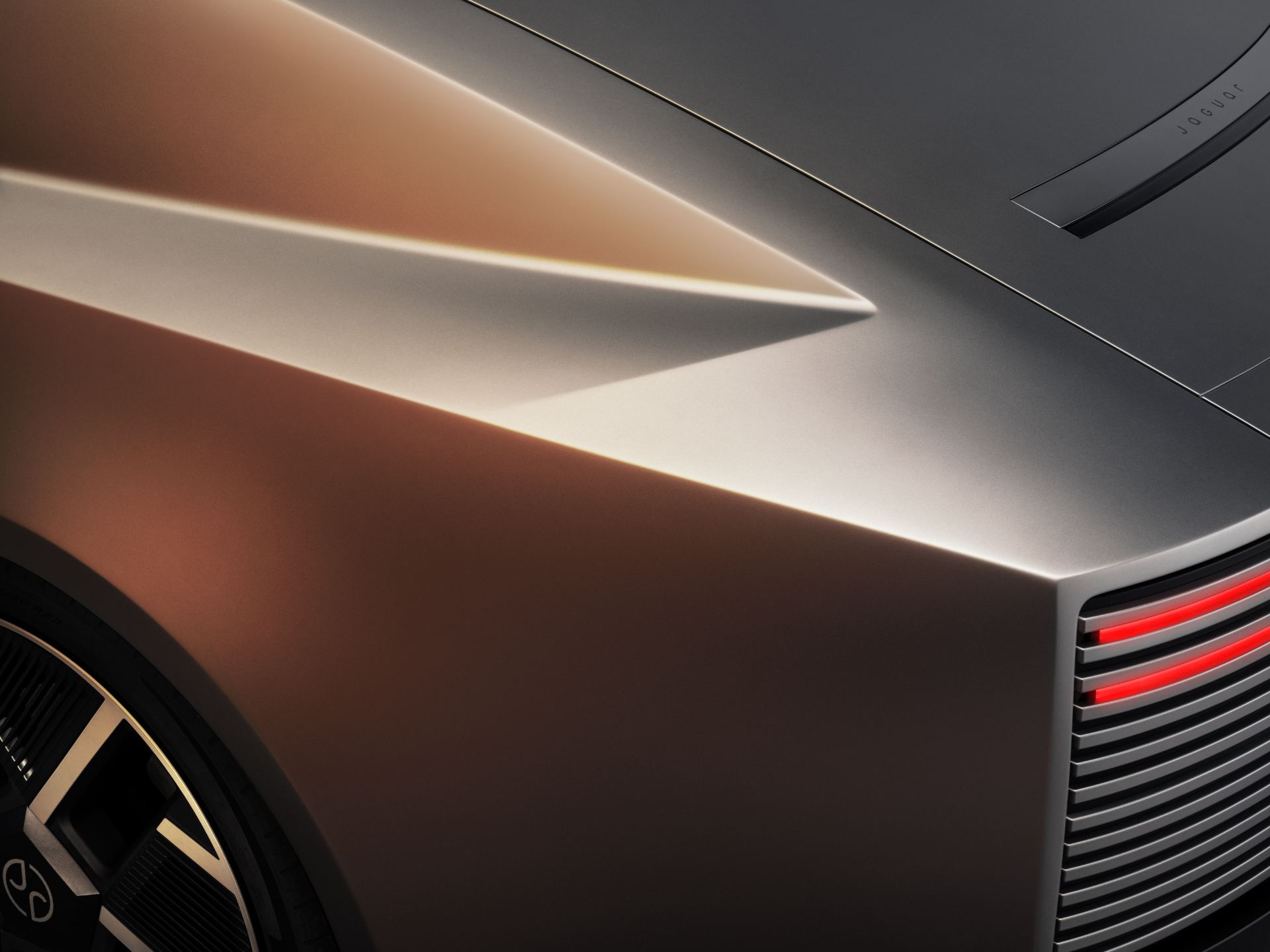
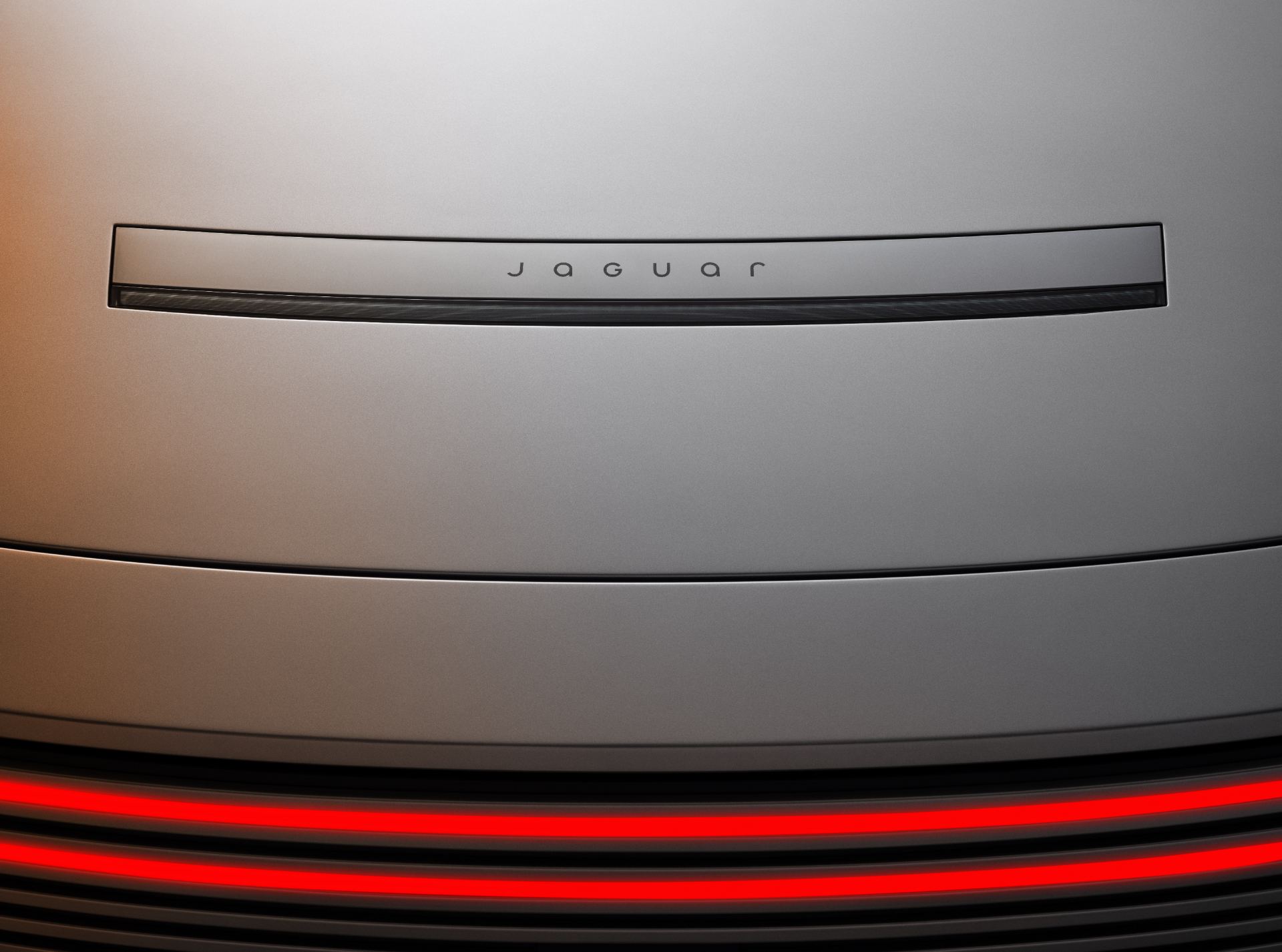
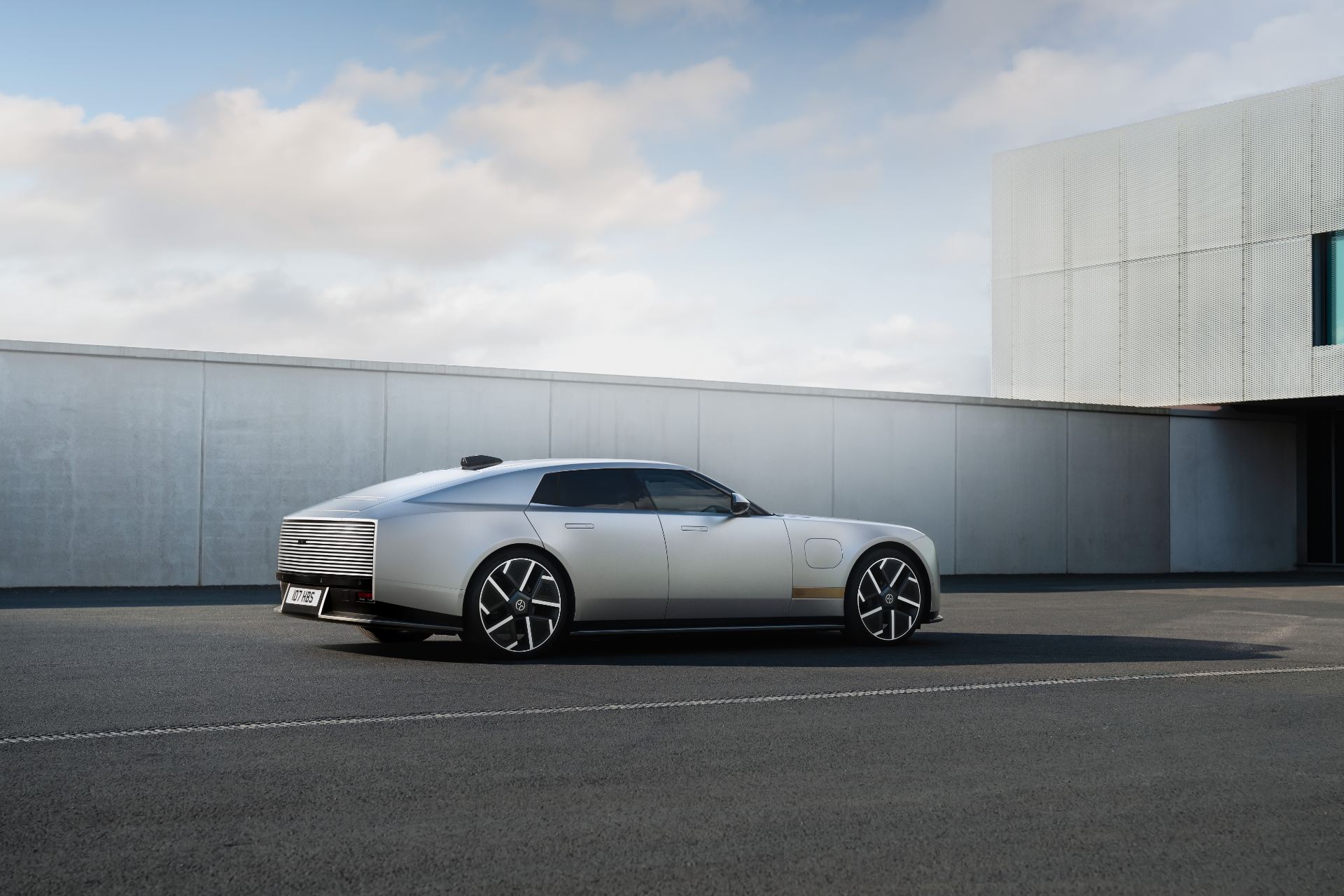
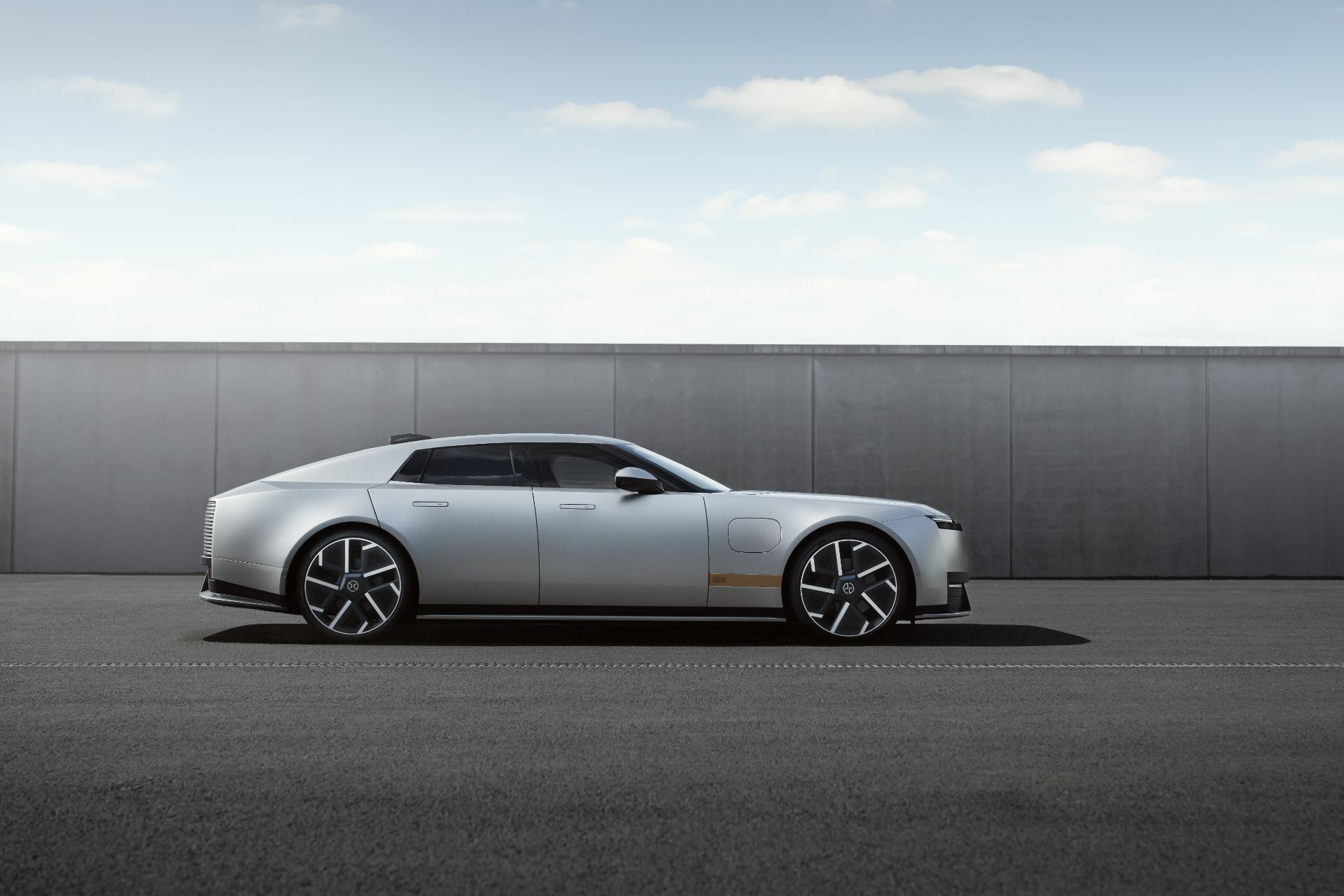
At 208 inches long and just 55 inches tall, the Type 01 reads as a slab of sculpture: short front overhang, very long hood, extended rear overhang and 23-inch wheels that stand more than half the car's height. The "luxury gap" between the front axle and the door measures 898mm, about 17% of the car's length and almost identical in proportion to the E-type. It is the most aerodynamic Jaguar ever at 0.23 Cd, helped by Active Vanes that stay shut until the brakes or powertrain need cooling, a three-stage deployable spoiler, flush door handles that can push through 4mm of sheet ice, and more than 7,000 wind tunnel tests. The digital LED headlights are the slimmest Jaguar has fitted, at 3.3 inches high with 17,000 pixels each, and the rear is a glassless tailgate with hidden-until-lit full-width lamps. Gloss paints run Visionary Silver, Dramatic White, Iconic Black, Compelling Blue and Refined Grey, with satin Modernist Blue and Mesmerizing Copper above them; a 60-car Chromatic Moments collection adds hand-crafted French Ultramarine and London Red.
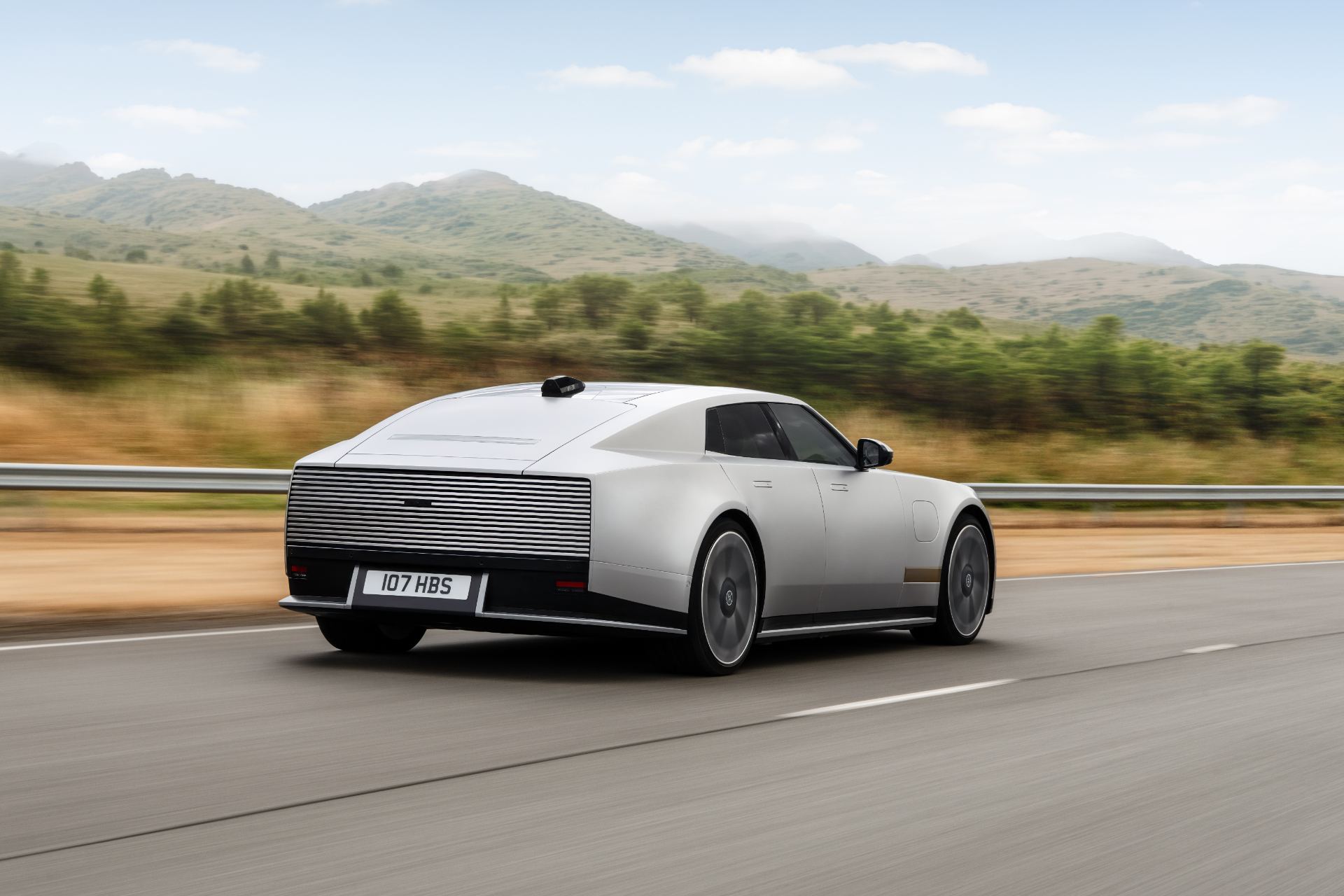
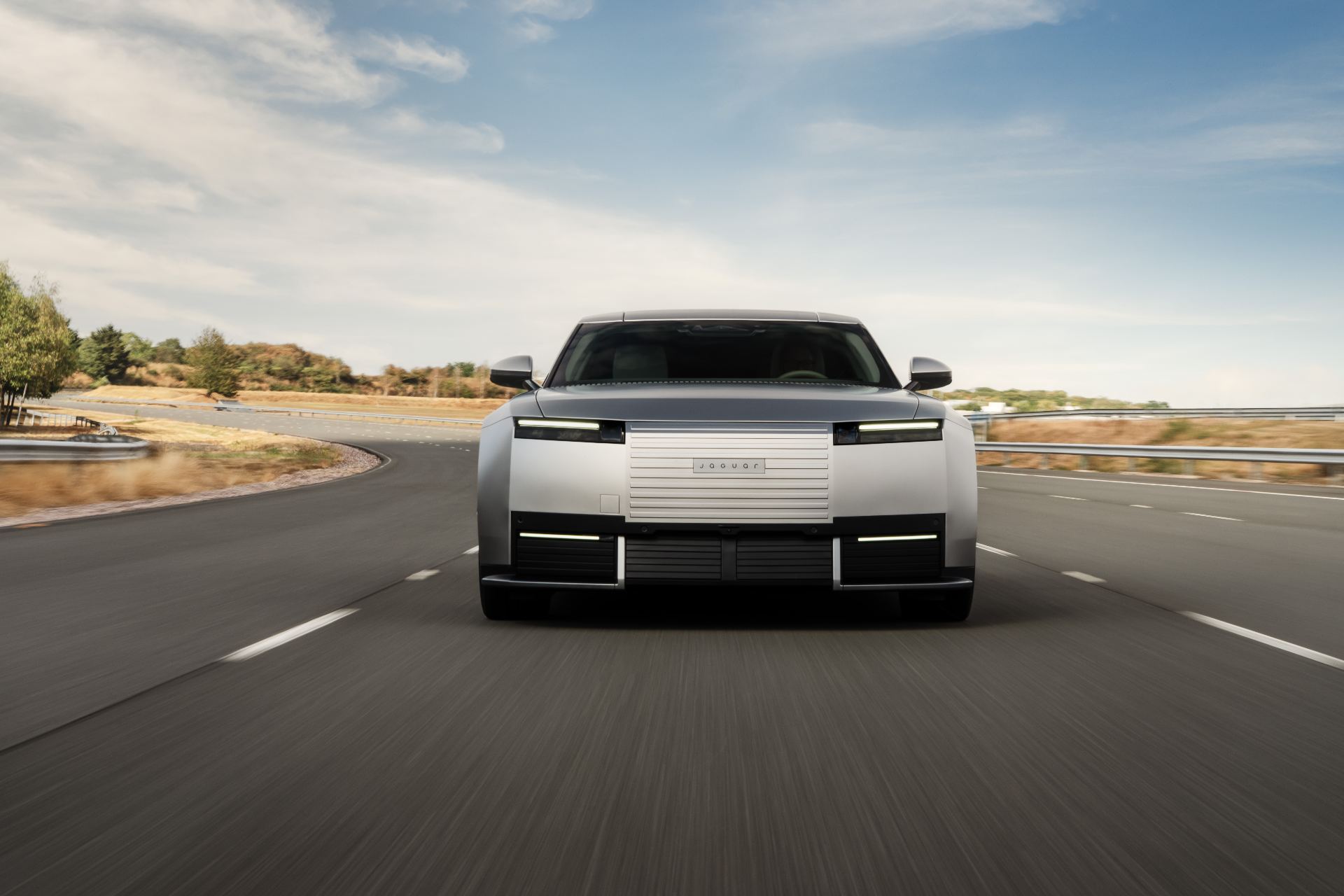
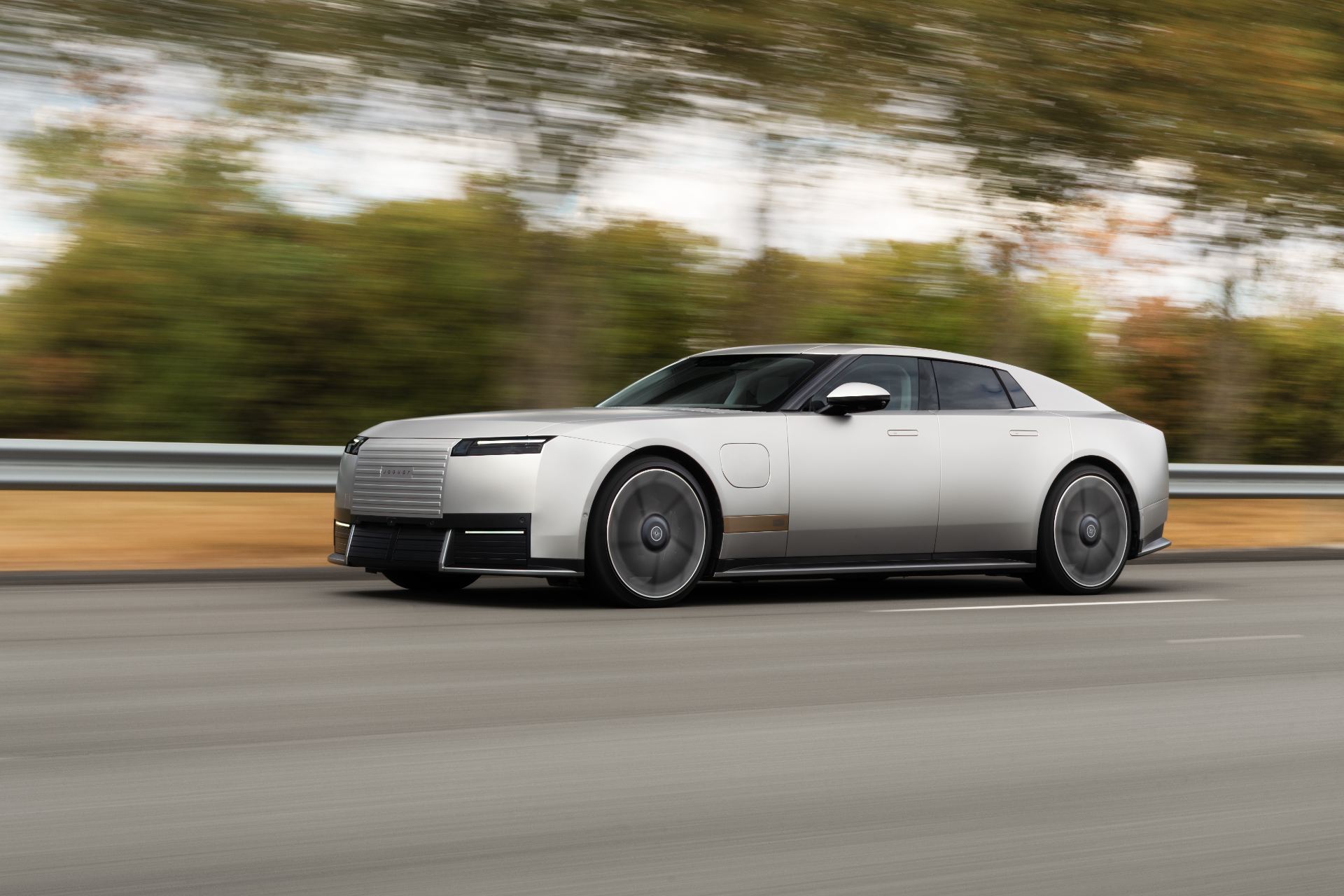
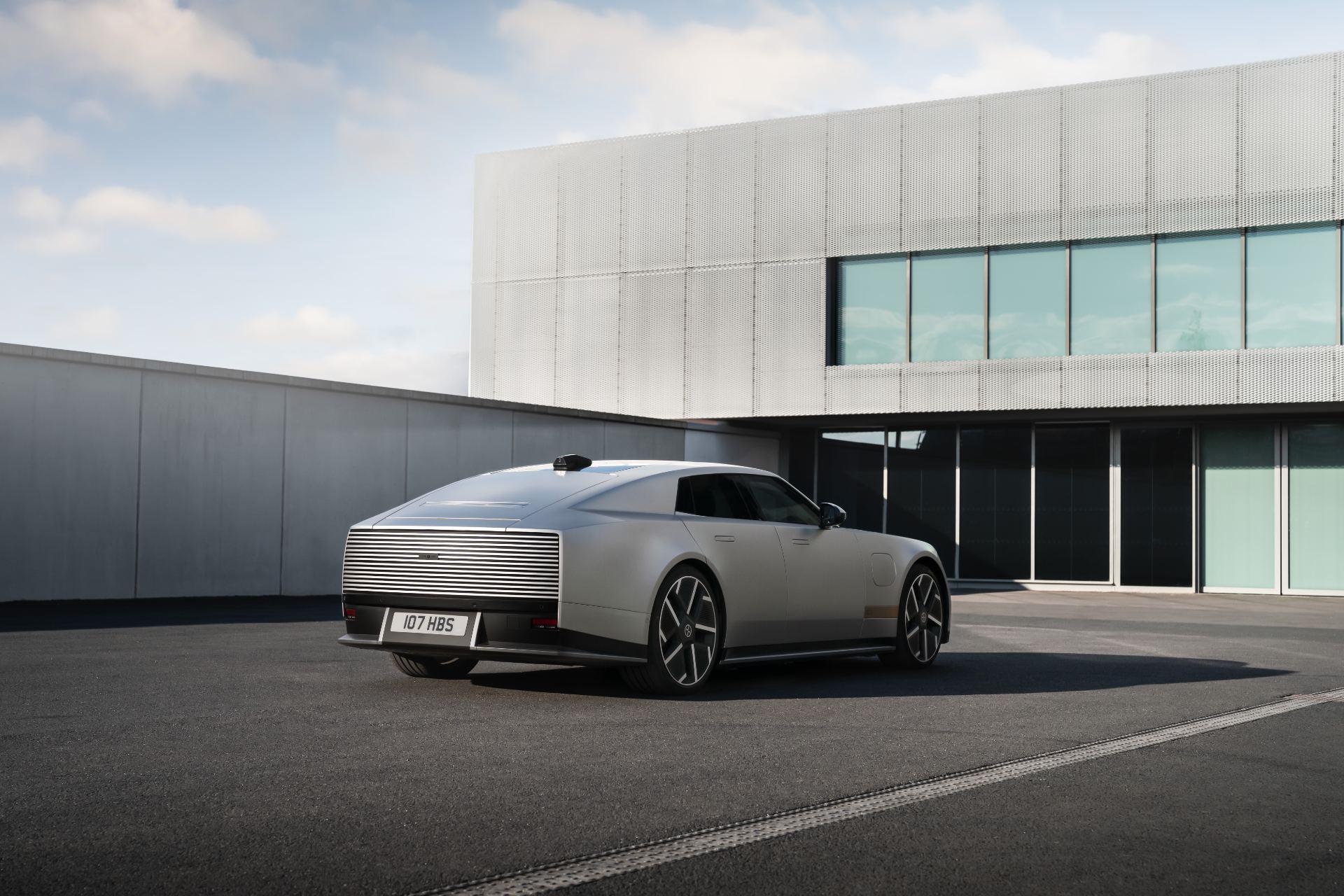
Interior and Seating
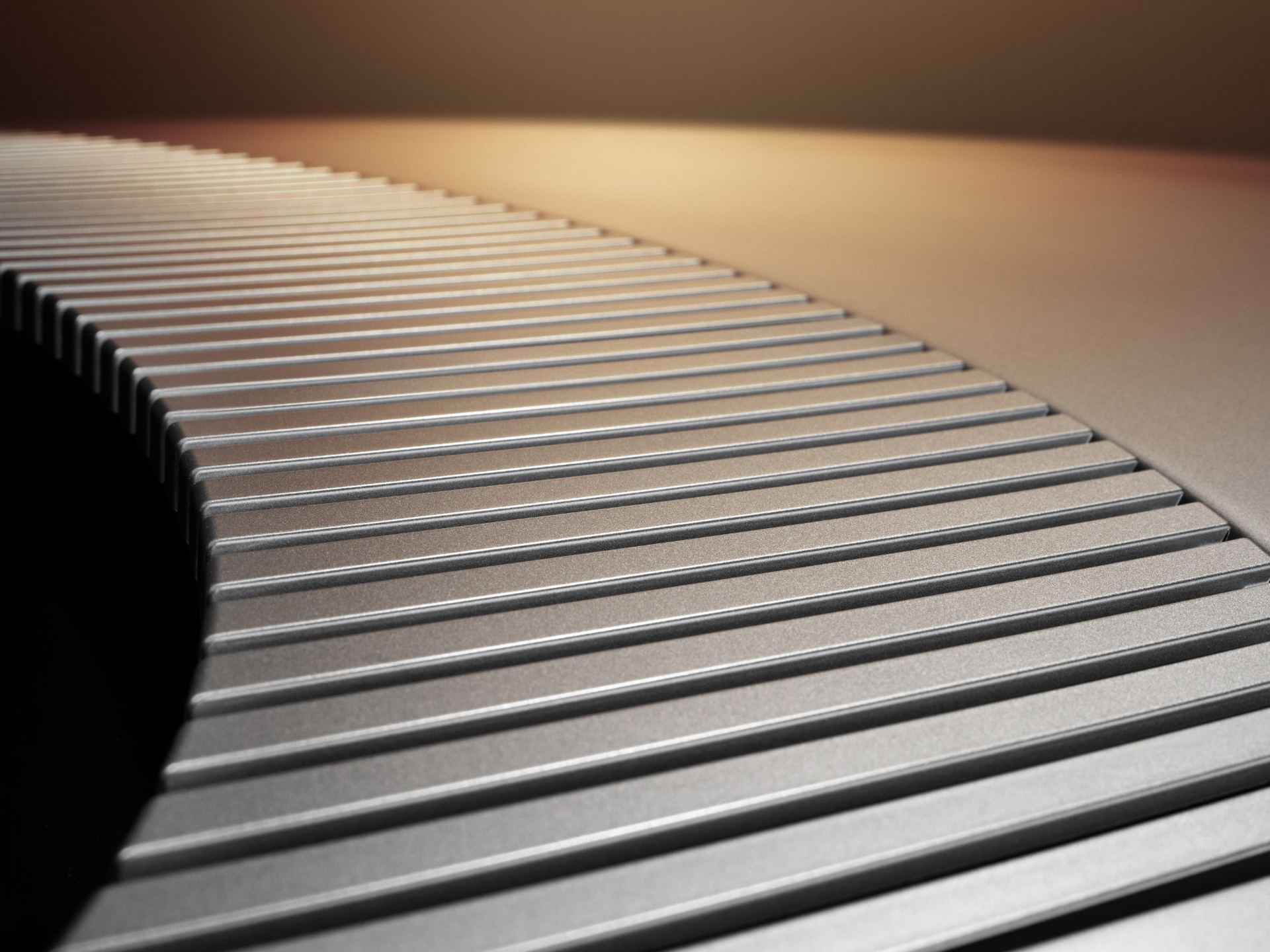
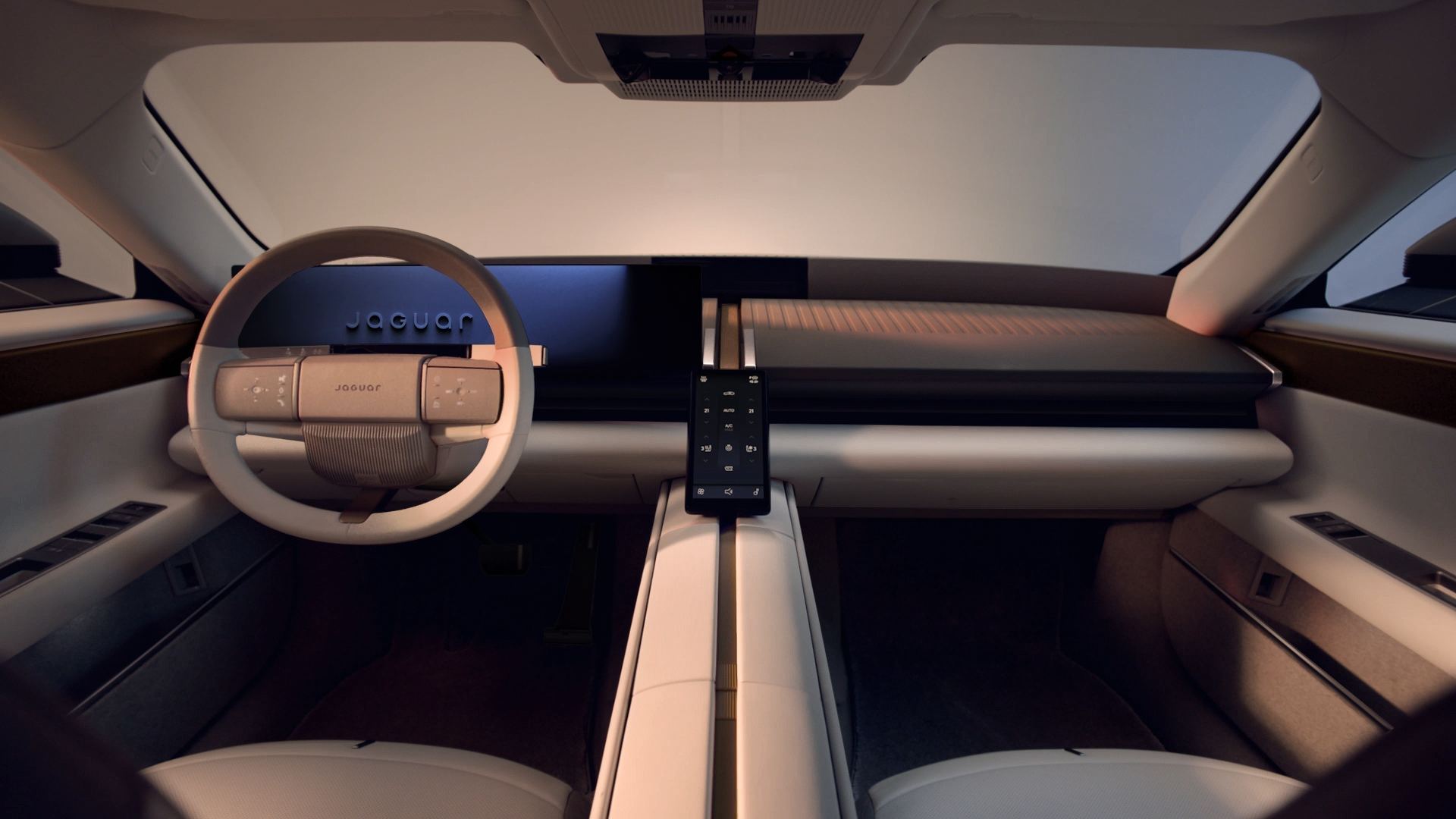
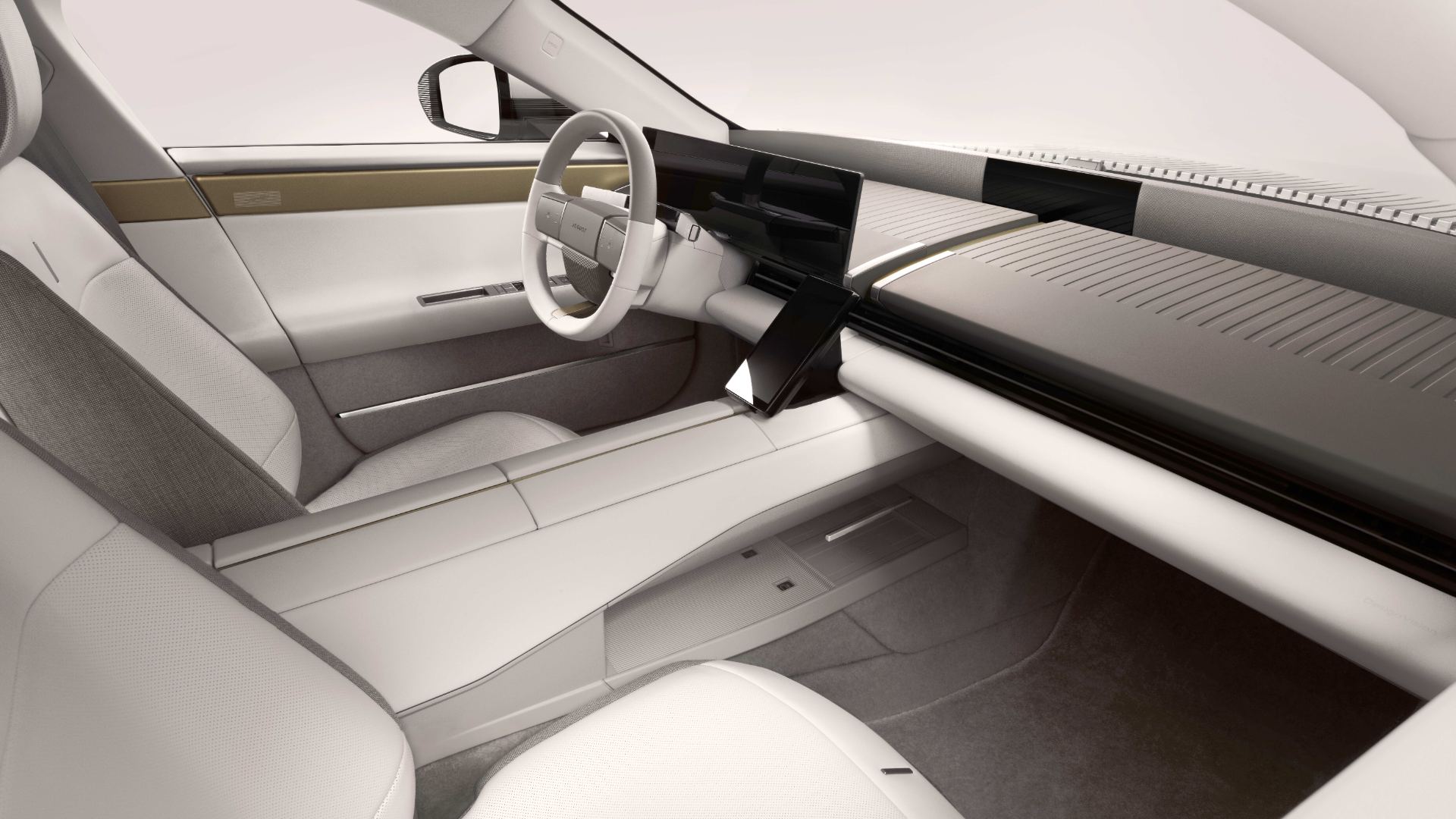
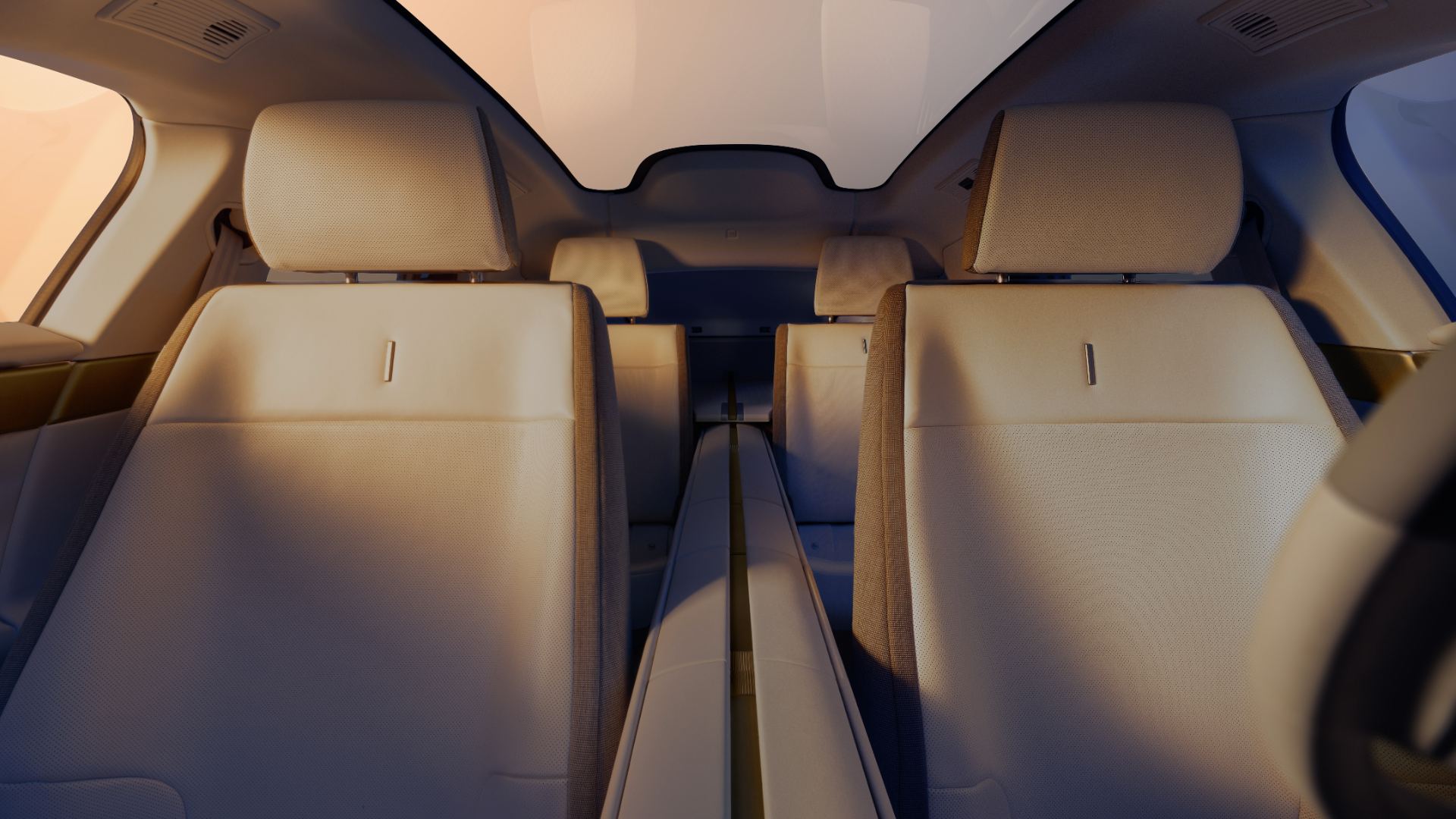
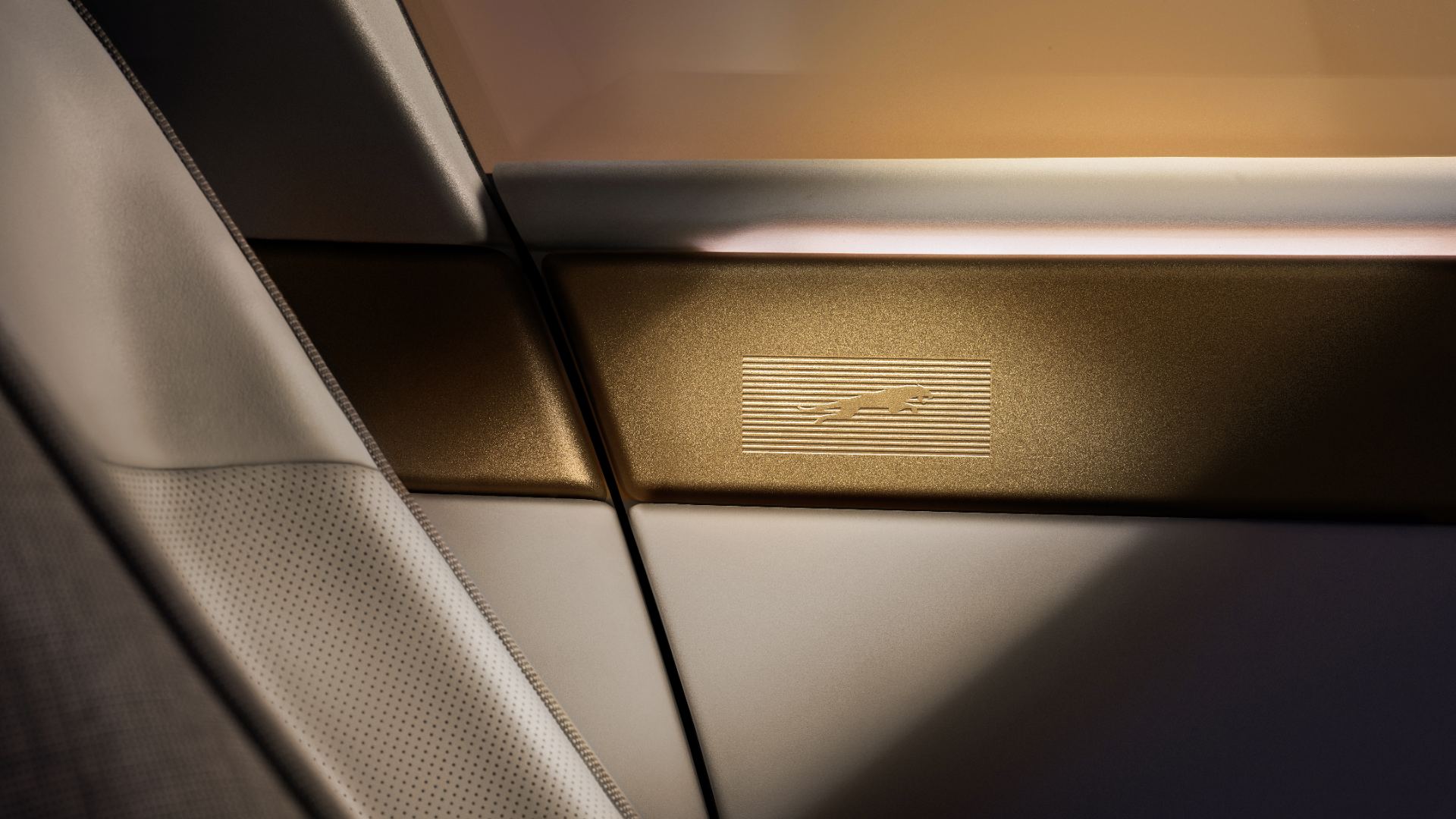
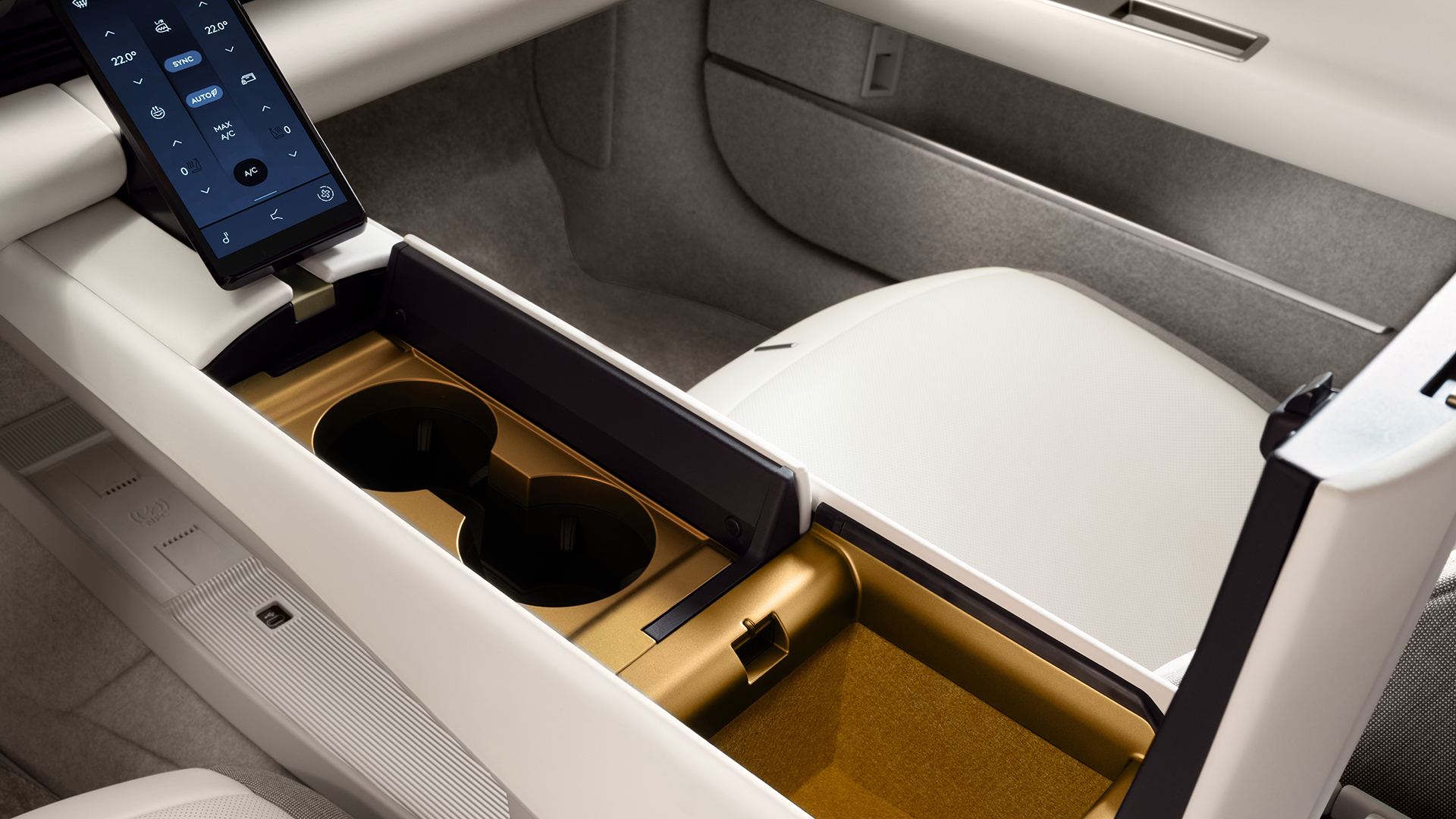
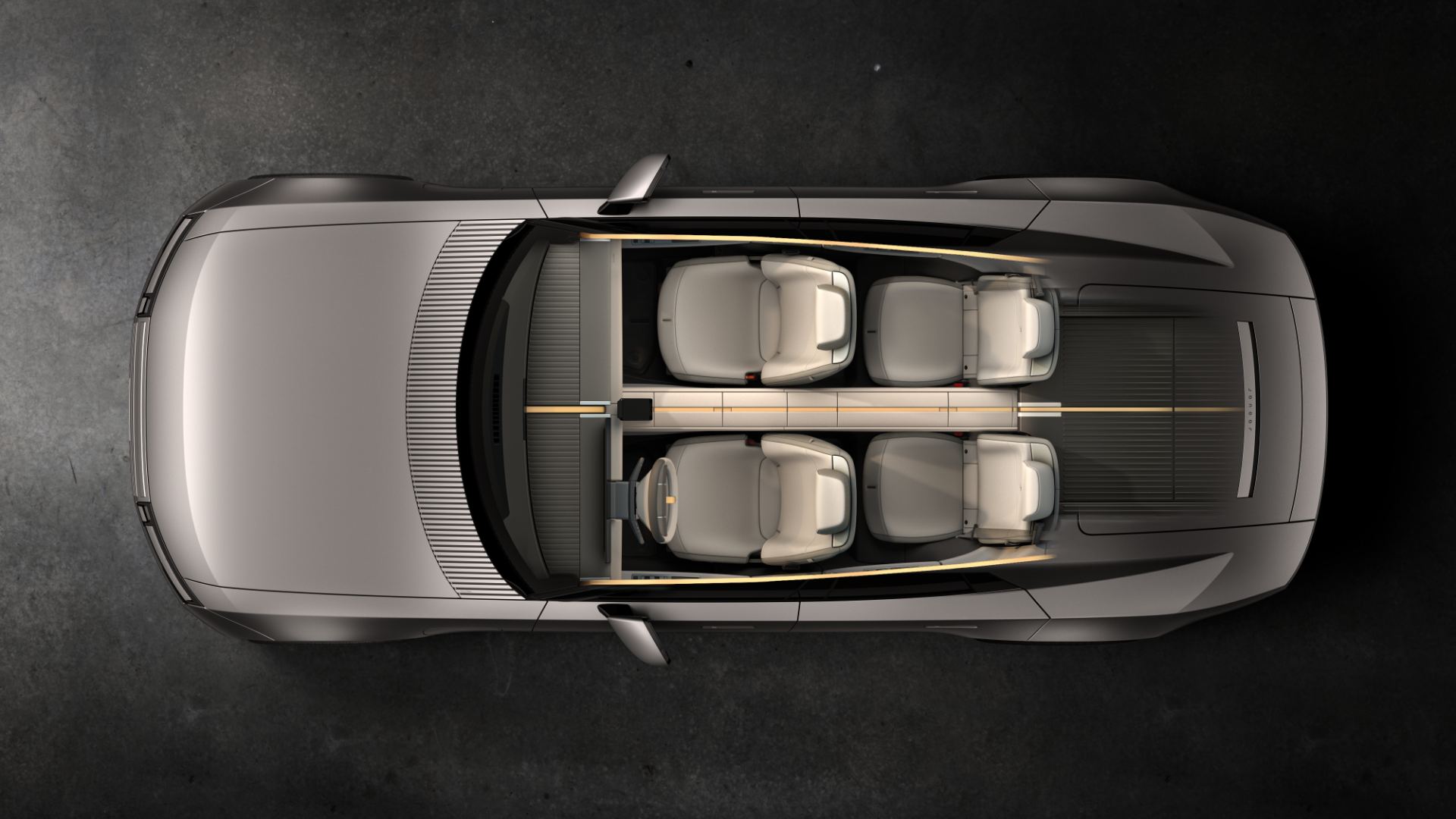
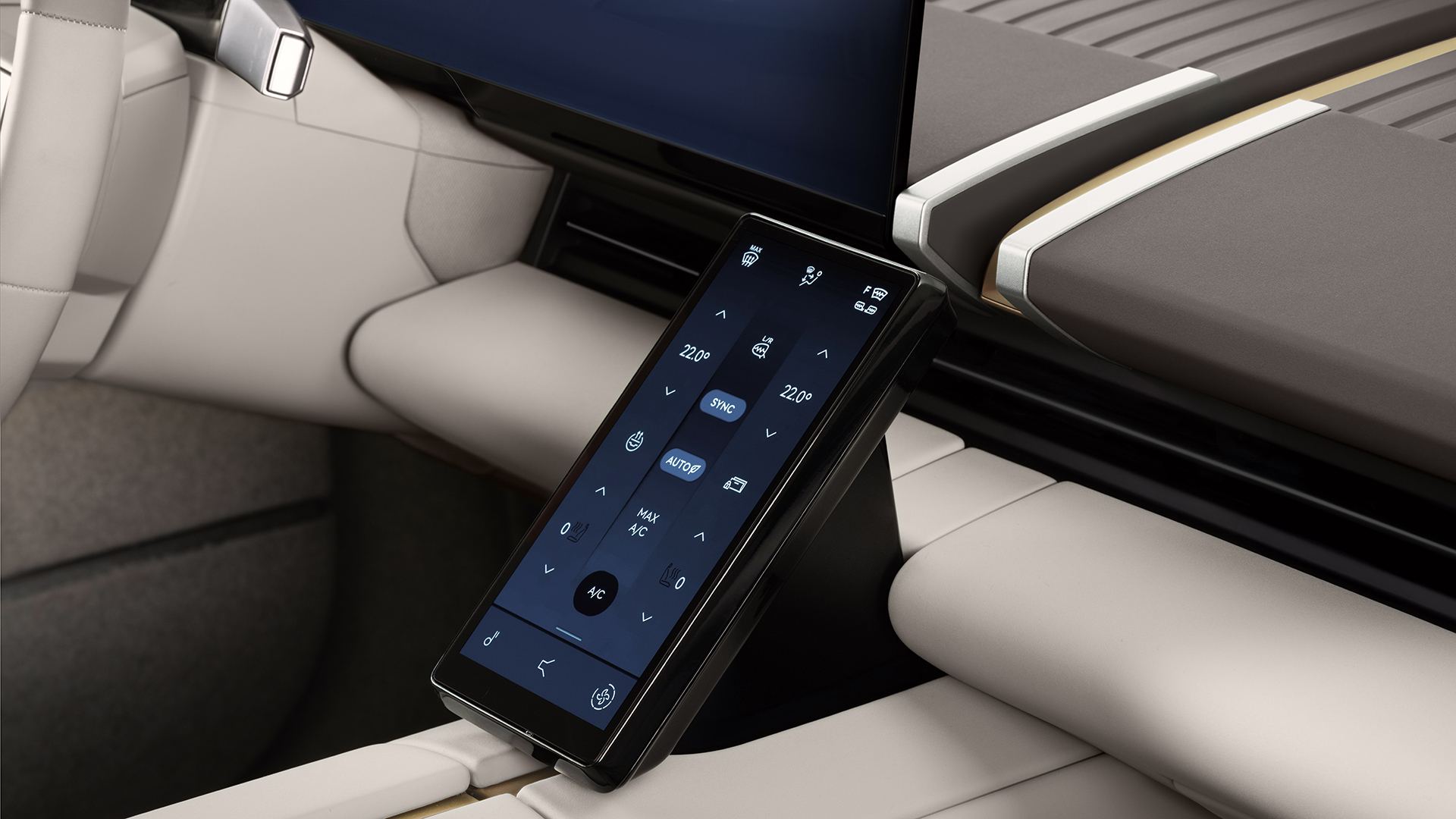
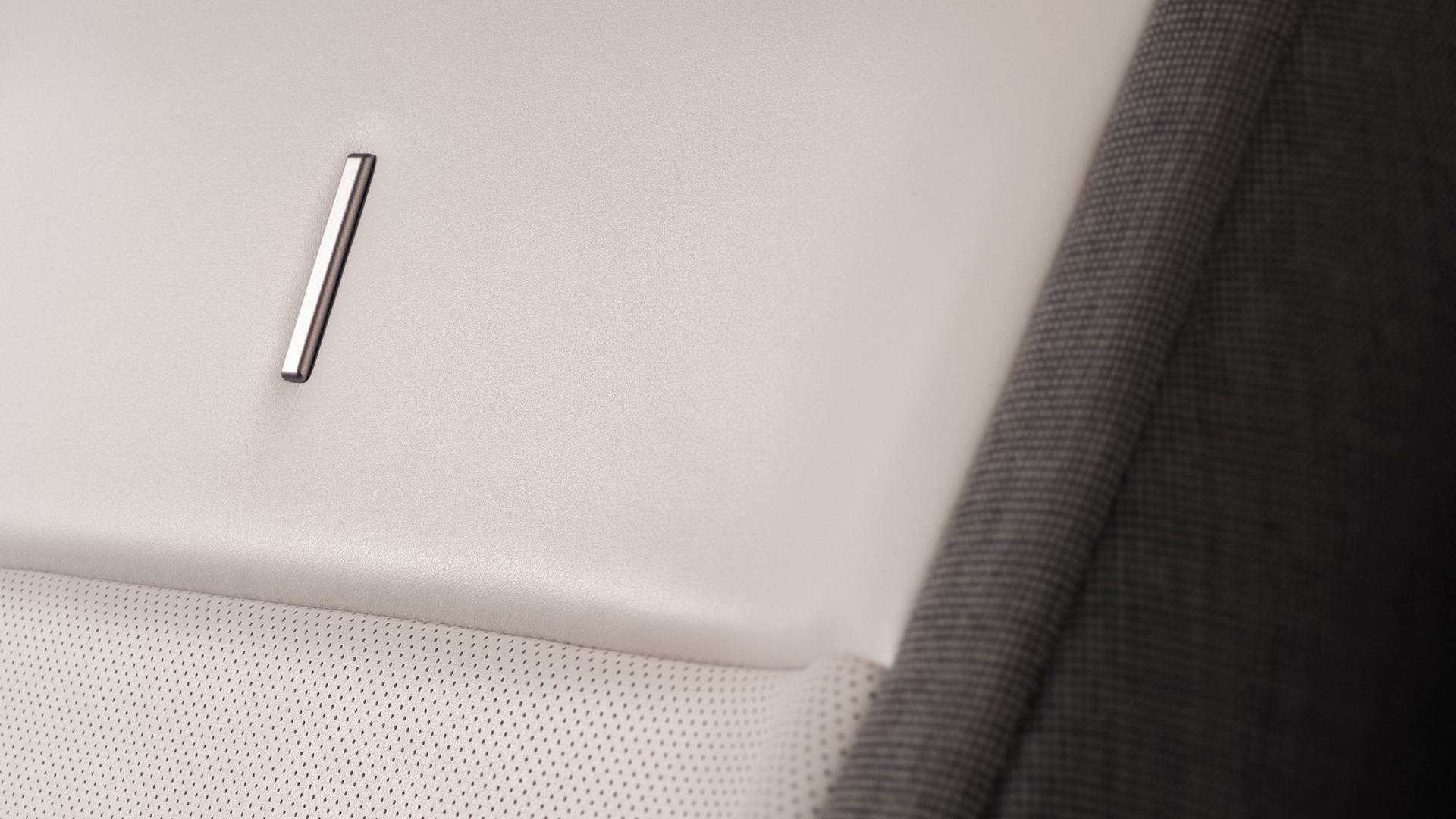
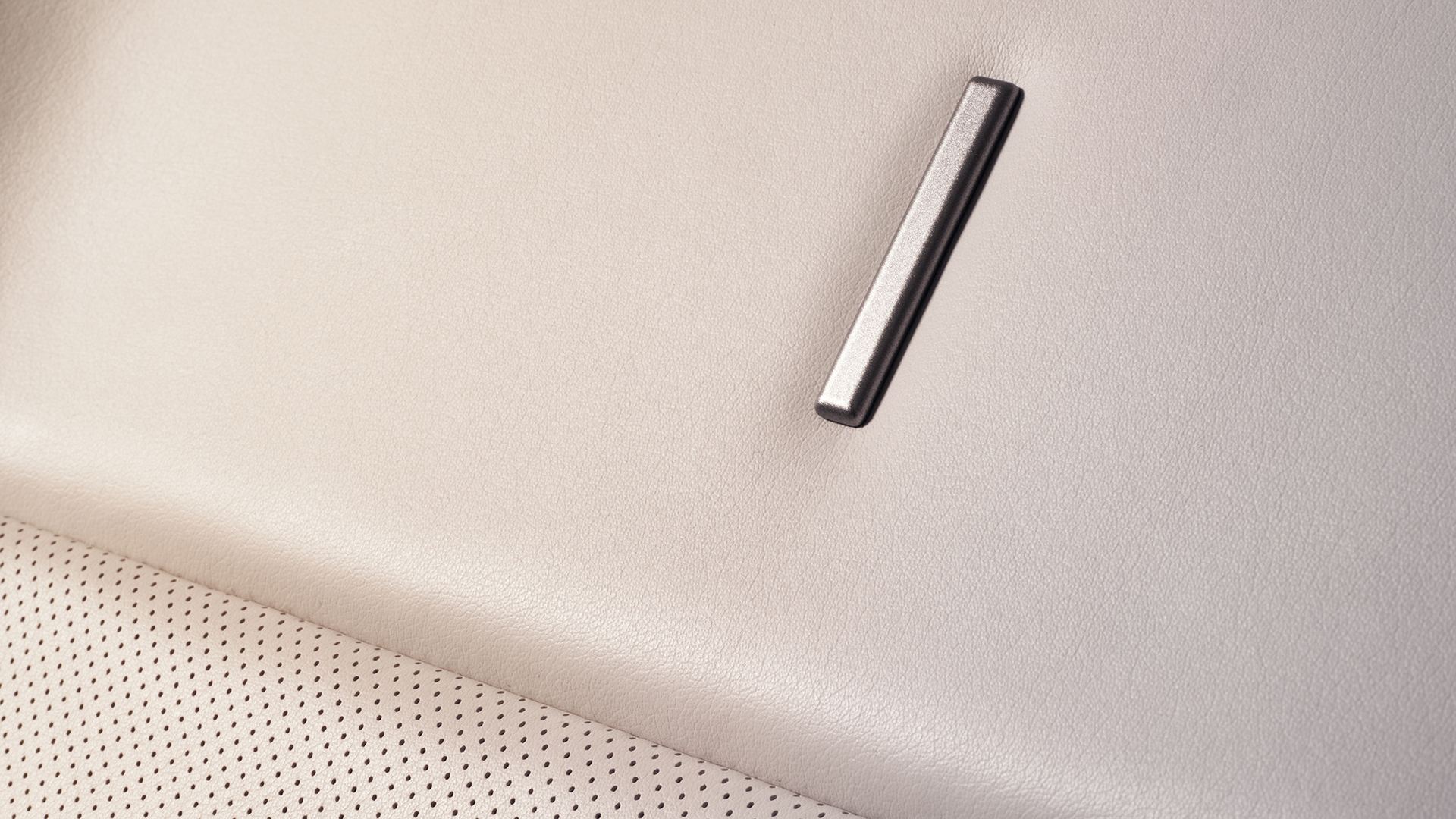
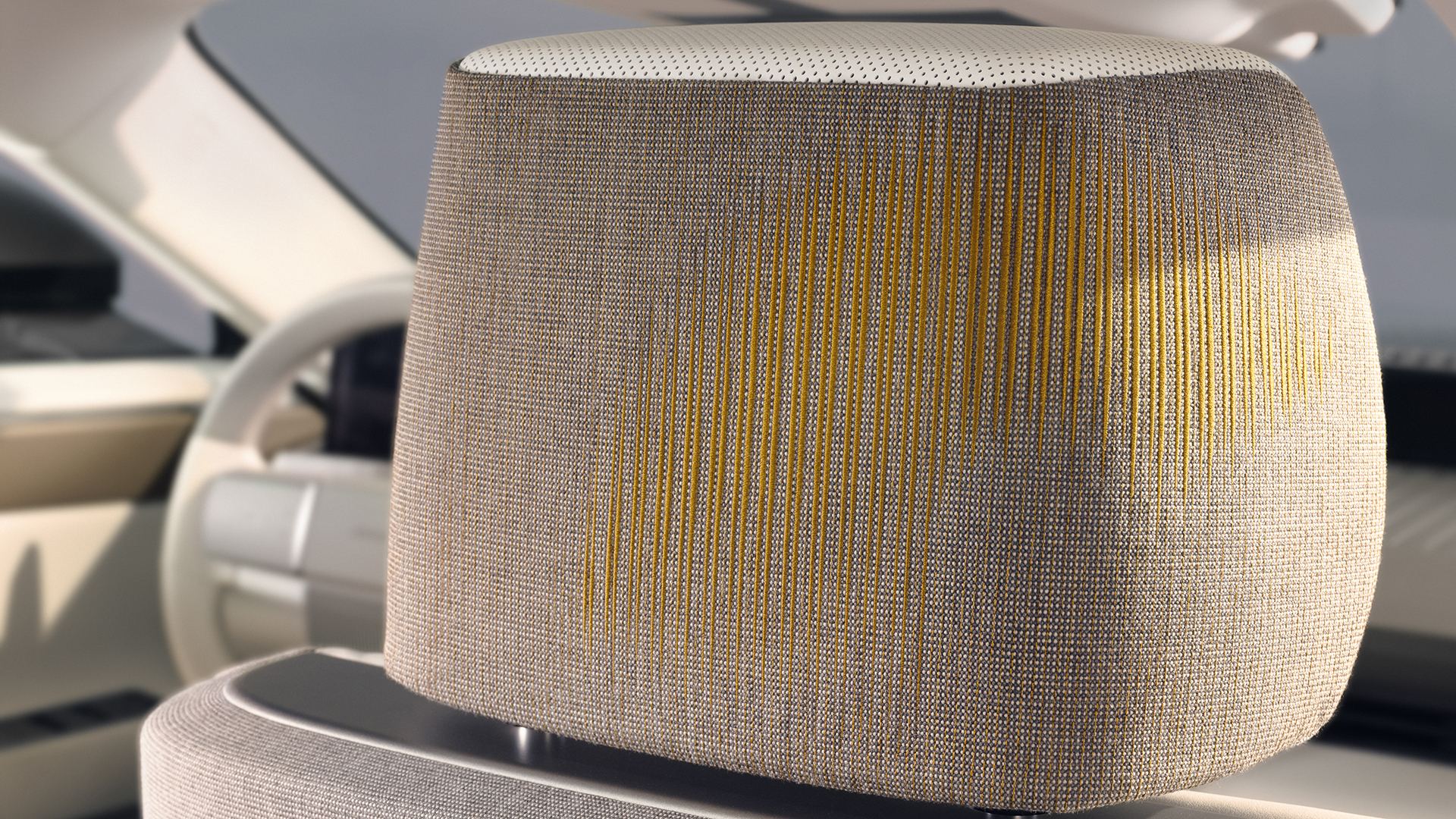
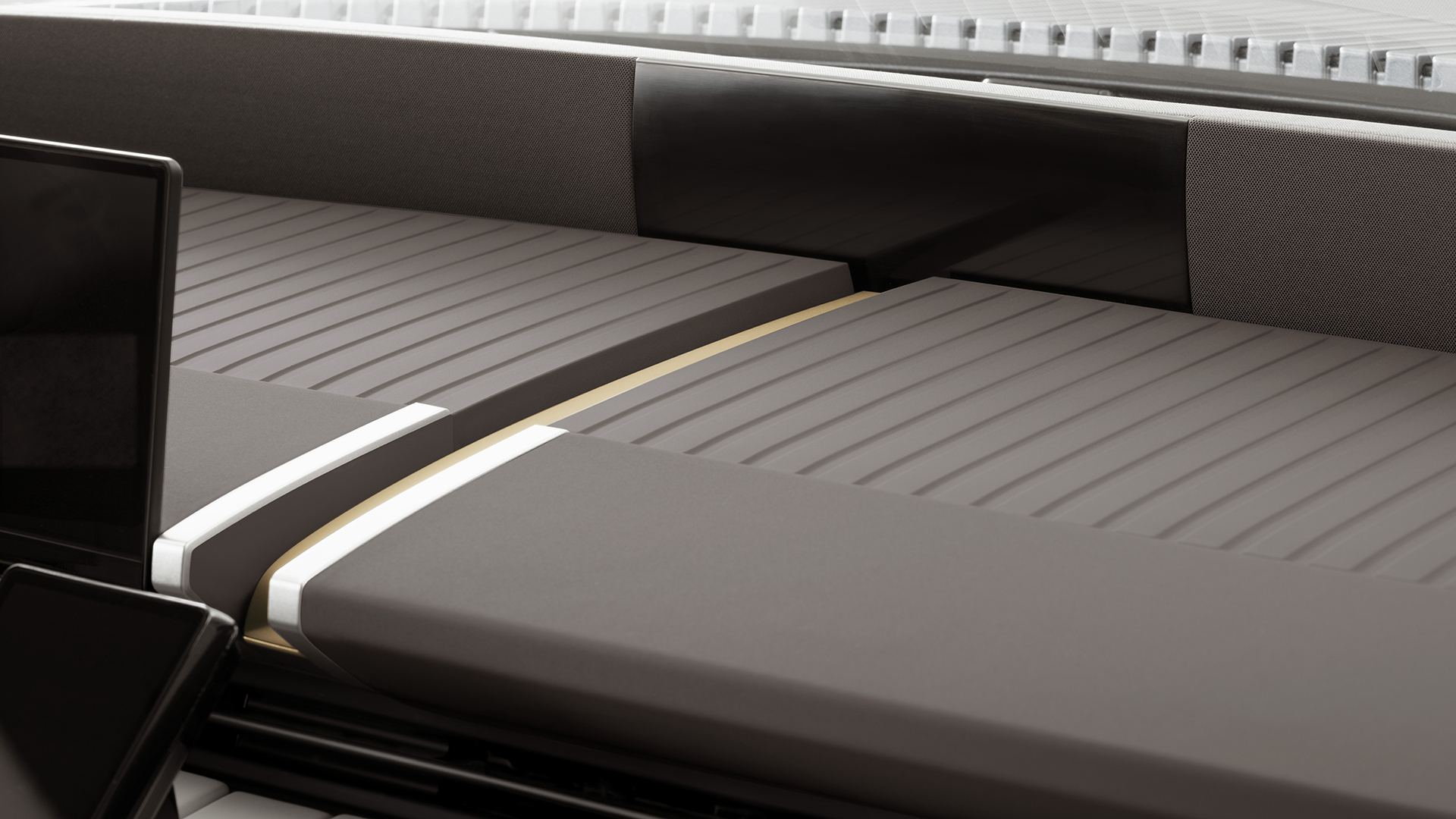
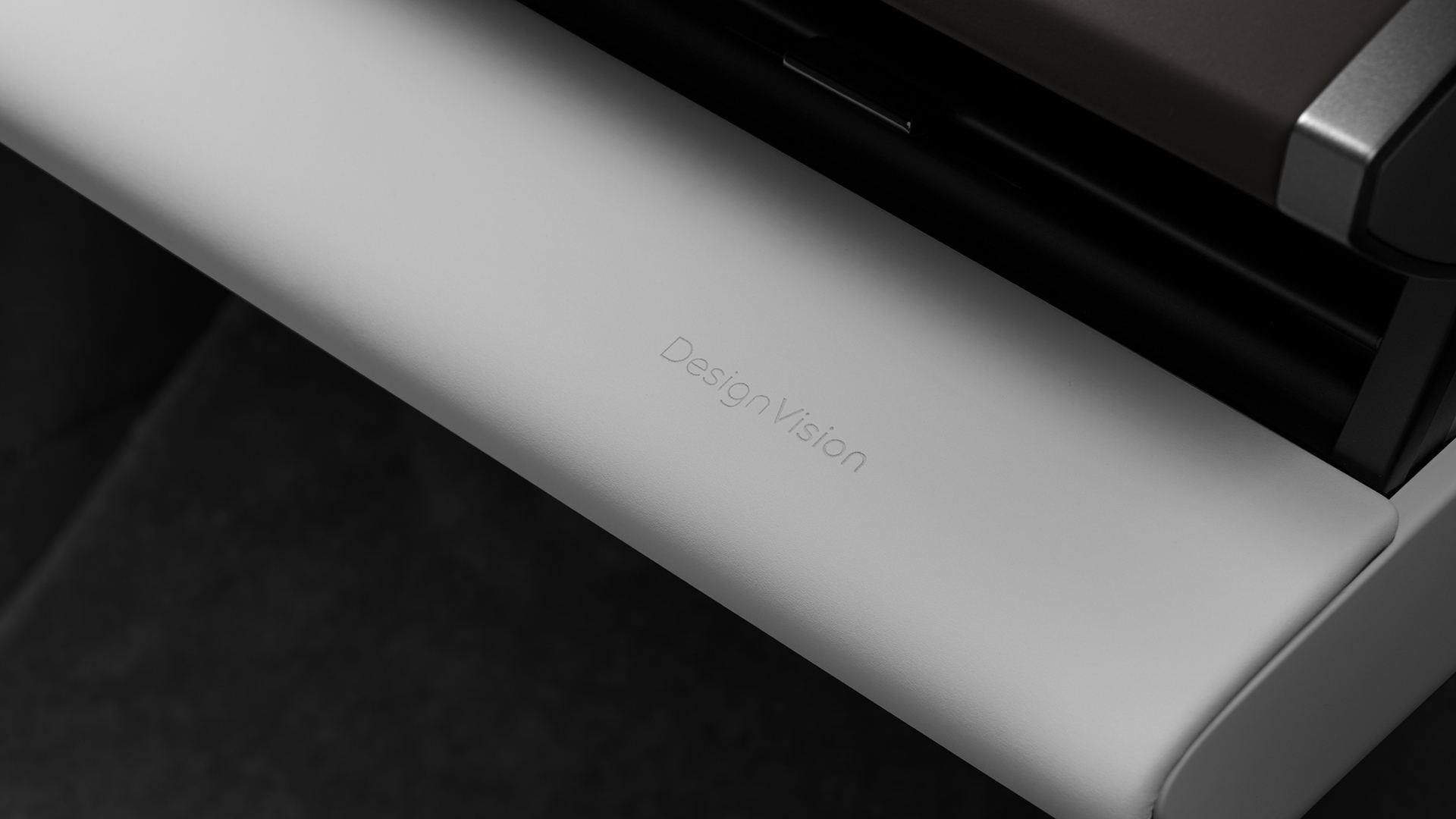
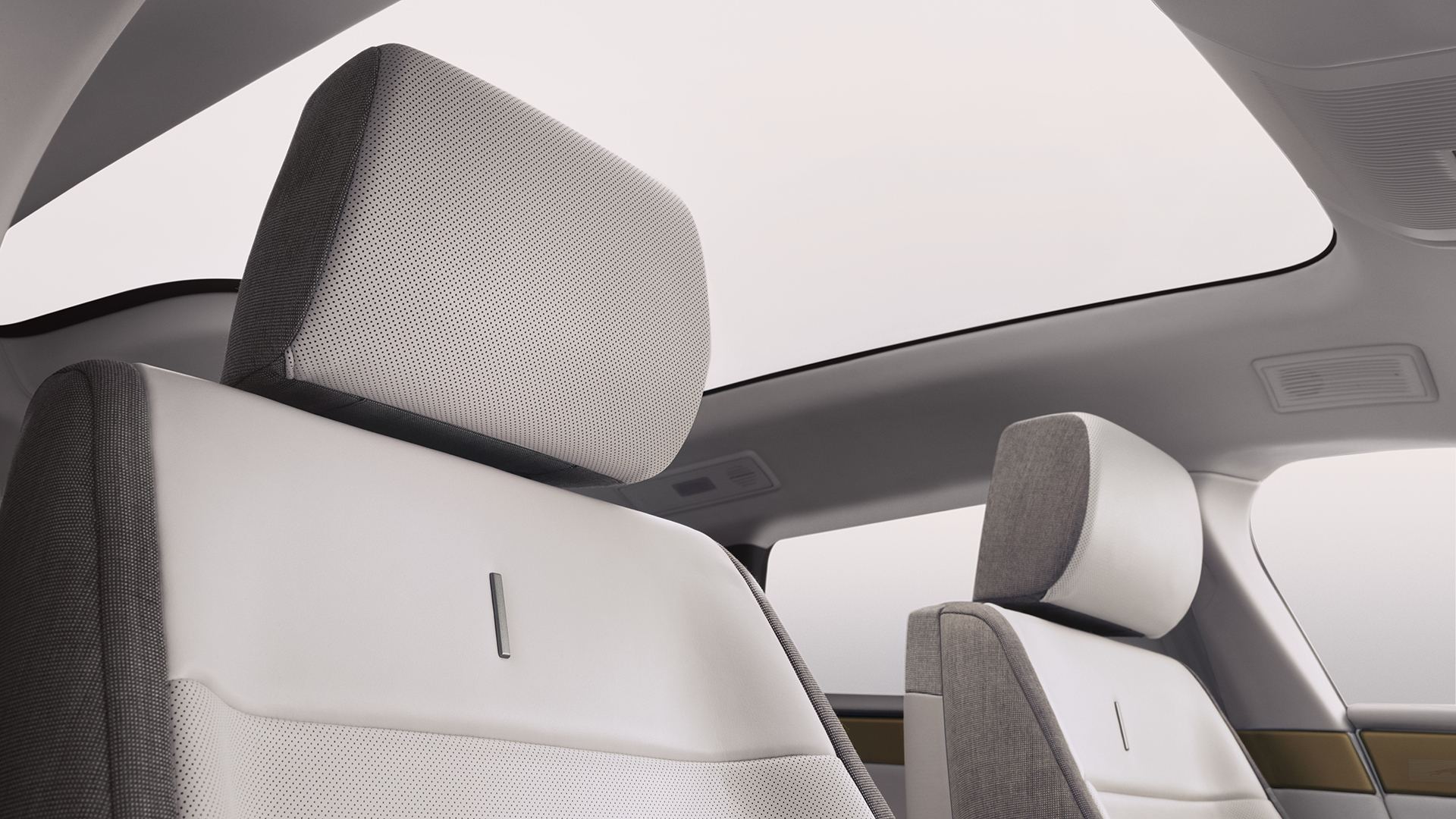
The cabin is split by a central spine that runs its full length, turning the interior into four individual spaces and opening to reveal brass-coloured stowage and cupholders. The same brass-inspired finishers run along the tops of the doors, each carrying the leaper. Ahead of the driver is a 24-inch single-glass OLED display, with a smartphone-style seven-inch touchscreen between the front seats for climate and audio and a matching seven-inch portrait screen in the rear console. There is no rear-view mirror: a digital ClearSight display sits centrally in the base of the windshield, at the same height as the door mirrors, embedded in a full-width Panoramic Soundbar that — along with headrest speakers and Sensory Audio seats — removes the need for front door speakers entirely. Front seats are 12-way powered, heated, cooled and fitted with a hot stone massage function; the 50:50 split-folding rear seats are also heated and cooled, under a standard panoramic glass roof with an adjustable virtual blind. Materials take their cue from travertine stone: a Woolblend Kvadrat DuoWeave textile wraps around either leather or Ultrafabrics NeoGrain, across three colourways called The Light Story, The Dark Story and The Original Story. Boot space is 15.9 cu ft, rising to over 35 cu ft with the rear seats down.
Performance and How It Drives
Three motors — a 260kW unit at the front and twin 310kW units at the rear — produce up to 1,015 hp and 1,007 lb-ft, enough for 0-60 mph in 3.1 seconds and, more tellingly for a grand tourer, 62-112 mph in 4.0 seconds. Jaguar's framing is "power in reserve": at a 60 mph cruise the car is using about 2% of what it has. The JEA structure is 73% aluminium with roughly 38,100 lb-ft per degree of torsional rigidity, carries a 50:50 weight distribution and sits the centre of gravity 2.4 inches below the driver's hip point. Dynamic Air Suspension with switchable-volume springs and twin-valve active dampers reads the road 500 times a second and adjusts 1,000 times a second, while all-wheel steering turns the rear axle up to six degrees for a 37.7 ft wall-to-wall turning circle. Four drive modes — Jaguar, Dynamic, Efficient and Ice & Snow — are joined by a configurable fifth Curated mode; Dynamic sends up to 87% of power rearward. Silicon carbide inverters and traction software borrowed from the double championship-winning Jaguar TCS Racing Formula E team cut torque reaction at each wheel from 100 milliseconds to as little as one.
What It Means for Buyers
On paper the Type 01 is competitive where it matters most in this class. At $130,500 it lands among the Porsche Taycan, Lucid Air, Audi e-tron GT, BMW i7 and Mercedes EQS, and few of them can match 1,015 hp and a 13-minute 200-mile charge at the same time. The harder questions are commercial rather than technical. Jaguar is asking roughly double its former average transaction price from a brand that has had nothing to sell for two years, has no electric track record with buyers, and has deliberately spent its goodwill on a rebrand that much of its old audience disliked.
That cuts both ways. If 78% of the 50,000 registrations really are new to Jaguar, the strategy is working as designed — the Type 01 was never aimed at the people who wanted another XF. But interest is not a deposit, the showroom network has been thinned by two years without product, and the 400-mile range is still an in-house estimate. The decisive evidence will be order conversion in early 2027 and whether deliveries land on time in the second half of the year.
- ✓Most powerful Jaguar road car ever at up to 1,015 hp, with 0-60 mph in 3.1 seconds
- ✓850-volt architecture adds 200 miles in 13 minutes on a 350kW charger
- ✓Genuinely distinctive design and a 0.23 Cd drag coefficient, the slickest Jaguar yet
- ✓NACS compatibility and Supercharger access for US buyers
- ✓Interior tech is substantial: 24-inch OLED display, ClearSight digital mirror, heated and cooled rear seats as part of the launch spec
- ✕At $130,500 it costs roughly double Jaguar's former average US transaction price
- ✕The 400-mile range is Jaguar's own estimate, not a confirmed EPA rating
- ✕Orders do not open until early 2027 and deliveries not until the second half of that year
- ✕No trim ladder published yet, so real-world option pricing is unknown
- ✕Jaguar has no modern EV track record and has spent two years without cars in showrooms
Common Questions
How much does the Jaguar Type 01 cost?
The Jaguar Type 01 has a starting MSRP of $130,500 in the United States and starts from £130,000 in the UK. Jaguar has announced the launch specification rather than a full trim range, and quotes power as "up to" 1,015 hp, so individual variant and options pricing is expected to be confirmed closer to orders opening in early 2027.
What is the Jaguar Type 01's range?
Jaguar quotes an anticipated range of up to 400 miles from the 118 kWh usable battery, and up to 320 miles during sustained highway driving at 75 mph. The 400-mile number is the company's own estimate rather than a confirmed EPA figure, so the official rating could differ when it is published.
When can you buy the Jaguar Type 01?
Order books open in early 2027, with first customer deliveries expected in the second half of 2027. The car will be built at JLR's Solihull plant in the UK, with electric motors and battery packs produced at Wolverhampton and body panels pressed at Halewood.
How fast is the Jaguar Type 01?
The Type 01 reaches 60 mph from rest in 3.1 seconds using its tri-motor setup, which produces up to 1,015 hp and 1,007 lb-ft of torque. Jaguar also quotes 62-112 mph in 4.0 seconds, a rolling-acceleration figure that matters more for a grand tourer than a standing start. Jaguar has not published a top speed.
Is the Jaguar Type 01 electric only?
Yes. The Type 01 is battery-electric only and is the first production car built on the dedicated Jaguar Electric Architecture, which was designed for electric power from the outset with no combustion version planned. Jaguar has confirmed that petrol engines are not returning to its range.
For a brand that sold 49 cars across Europe in a single month last year, the Type 01 is less a model launch than a restart. The engineering case is strong and the car is unmistakable, which was always the point — but the next real milestone is early 2027, when the order books open and interest has to turn into signatures.