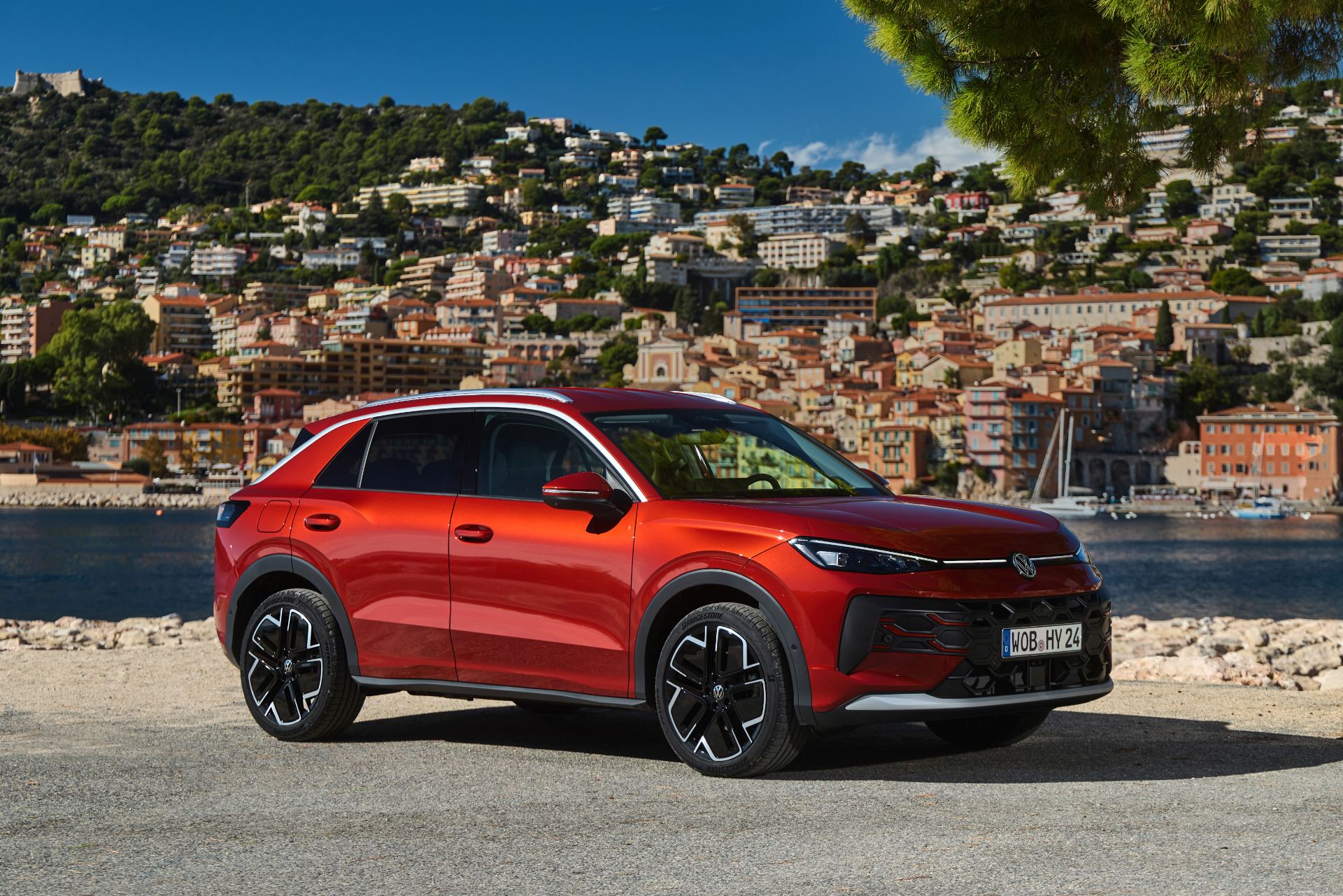
The Volkswagen T-Roc Hybrid costs from £33,725 on the road in the UK, with the range topping out at £40,500 for the R-Line 170 PS. Order books opened on 12 November 2026 and first deliveries are expected in early 2027. It is the first full hybrid Volkswagen has put on sale in Britain — a petrol-electric system that charges itself and never needs plugging in — and it lands in the T-Roc, one of the brand's best-selling models in Europe.
Context & Background
Volkswagen has been an unusual holdout. It has sold eTSI mild hybrids, which use a small 48-volt system that cannot drive the car on its own, and eHybrid plug-ins, which need a cable and a parking space with a socket. What it has never offered British buyers is the middle option that Toyota, Honda, Renault and Nissan have built their compact SUV sales on: a self-charging full hybrid that can run on electricity alone at town speeds and asks nothing of the owner.
That changed on 1 November 2026, when Volkswagen announced a new full hybrid system for both the Golf and the T-Roc, with pre-sales opening across several European markets. In Germany the T-Roc Life with the 100 kW system is listed at €37,545. The UK announcement followed on 10 November, with order books opening two days later. The T-Roc itself is new for 2026 — the second generation is 12 cm longer than the car it replaces, at 4,372 mm, on a 2,629 mm wheelbase, with a 475-litre boot.
How Much Does the VW T-Roc Hybrid Cost?
Pricing runs from £33,725 to £40,500 on the road across three trims. Only the entry Match grade is offered at the advertised starting price, and only with the lower 136 PS output. Style and R-Line can be had with either power level, which is where the gap opens up: stepping from Match to Style costs £4,165 before any change in powertrain. The more powerful 170 PS system adds £2,090 to a Style and £1,990 to an R-Line.
| Trim | System Output | 0-62mph | Price (OTR) |
|---|---|---|---|
| Match | 136 PS (100 kW) | 9.7 sec | £33,725 |
| Style | 136 PS (100 kW) | 9.7 sec | £37,890 |
| R-Line | 136 PS (100 kW) | 9.7 sec | £38,510 |
| Style | 170 PS (125 kW) | 8.5 sec | £39,980 |
| R-Line | 170 PS (125 kW) | 8.5 sec | £40,500 |
The figure that matters most is the one against the existing range: the hybrid sits roughly £1,230 above the equivalent 1.5 eTSI mild hybrid. Volkswagen's argument is that fuel savings alone should recover that over an ownership period, with company-car drivers ahead faster still because the hybrid's lower CO2 output drops it into a cheaper benefit-in-kind band — UK trade reporting puts that rate at 31 per cent. Every hybrid trim comes with 18-inch alloy wheels, an 8.0-inch digital cockpit, the 12.9-inch touchscreen, heated front seats, a heated leather-wrapped steering wheel, rear privacy glass and adaptive cruise control.
T-Roc Hybrid Specs, MPG and Battery
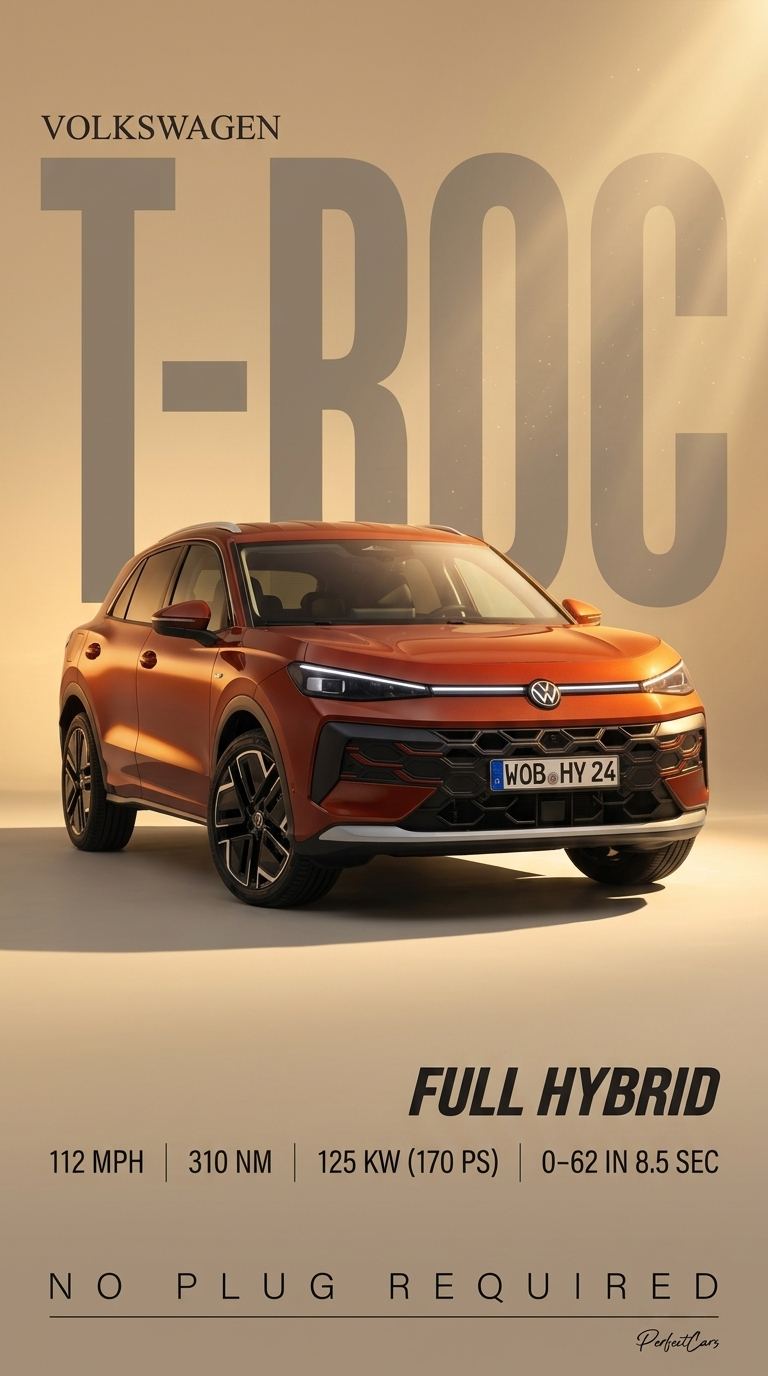
Both versions pair a 1.5 TSI evo2 petrol engine with two electric motors housed in a hybrid module and a 1.6 kWh gross battery of 84 prismatic nickel-manganese-cobalt cells, liquid-cooled and mounted under the rear bench. Volkswagen quotes 136 PS and 170 PS as system outputs; the engine alone makes 131 PS or 150 PS, with 250 Nm either way. Drive goes to the front wheels through a single-speed gearbox inside the hybrid module rather than the familiar DSG. The car runs on electricity alone up to around 60 km/h (about 37 mph), switches to a series mode in which the engine acts purely as a generator, then brings the engine in to drive the wheels above that speed. Eco, Comfort and Sport profiles are selectable, and top speed is electronically limited to 112 mph.
| Specification | 136 PS | 170 PS |
|---|---|---|
| System power | 100 kW (136 PS) | 125 kW (170 PS) |
| System torque | 288 Nm | 310 Nm |
| Petrol engine | 1.5 TSI evo2, 131 PS | 1.5 TSI evo2, 150 PS |
| Battery | 1.6 kWh gross, 84 NMC cells | 1.6 kWh gross, 84 NMC cells |
| 0-62mph | 9.7 sec | 8.5 sec |
| Top speed | 112 mph (limited) | 112 mph (limited) |
| WLTP consumption | 5.5-4.9 l/100km | 5.6-5.0 l/100km |
On economy, Volkswagen publishes WLTP consumption of 5.5-4.9 l/100km for the 136 PS car and 5.6-5.0 l/100km for the 170 PS, equivalent to roughly 51-58 mpg and 50-57 mpg respectively. CO2 is quoted at 127-115 g/km for the 170 PS version; the figure for the 136 PS has not been published. Several UK outlets report a flat 55.4 mpg for both outputs, which falls inside Volkswagen's own band, but the UK announcement itself did not carry a confirmed WLTP consumption or CO2 figure — treat the single number as provisional until the configurator lists it.
Exterior
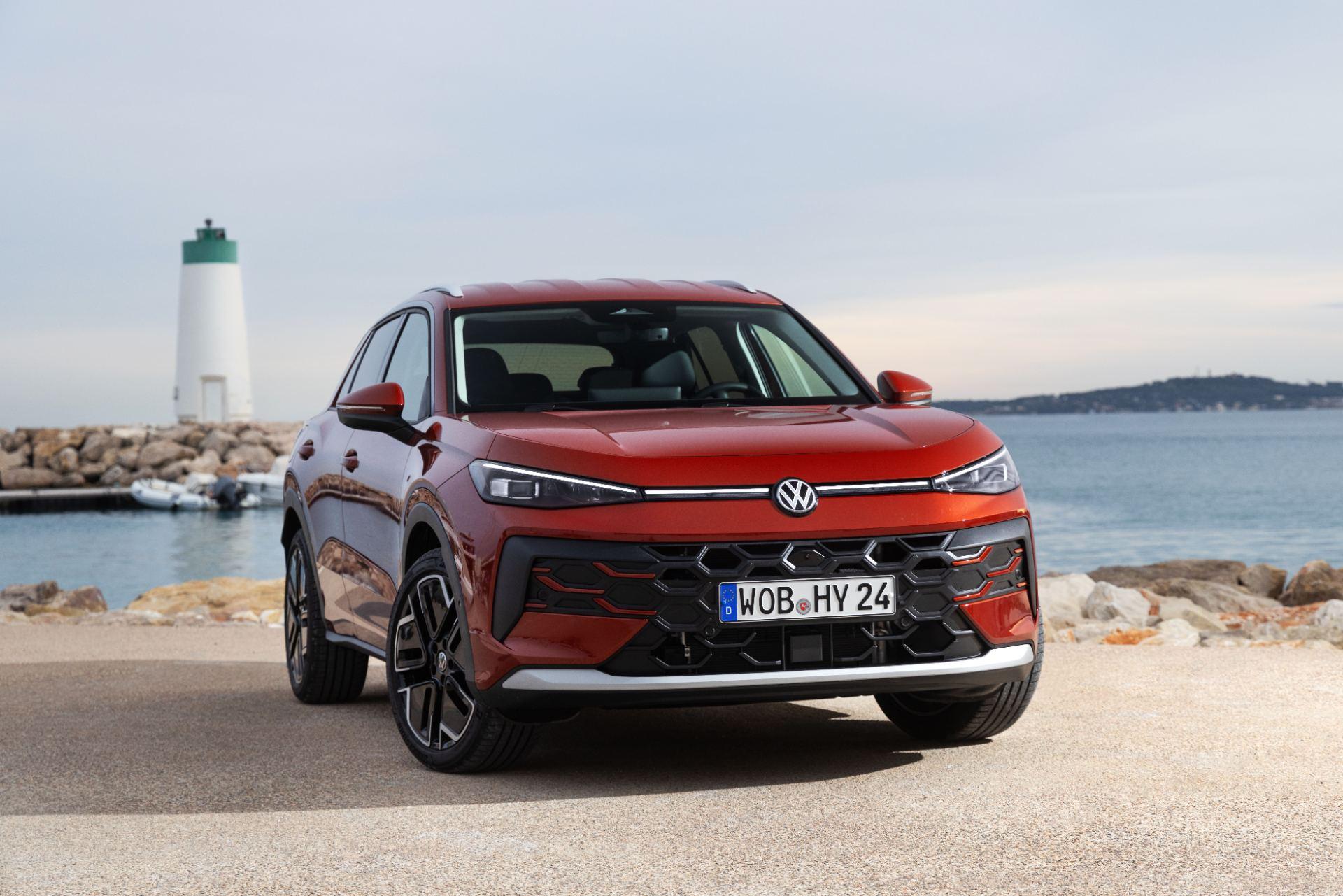
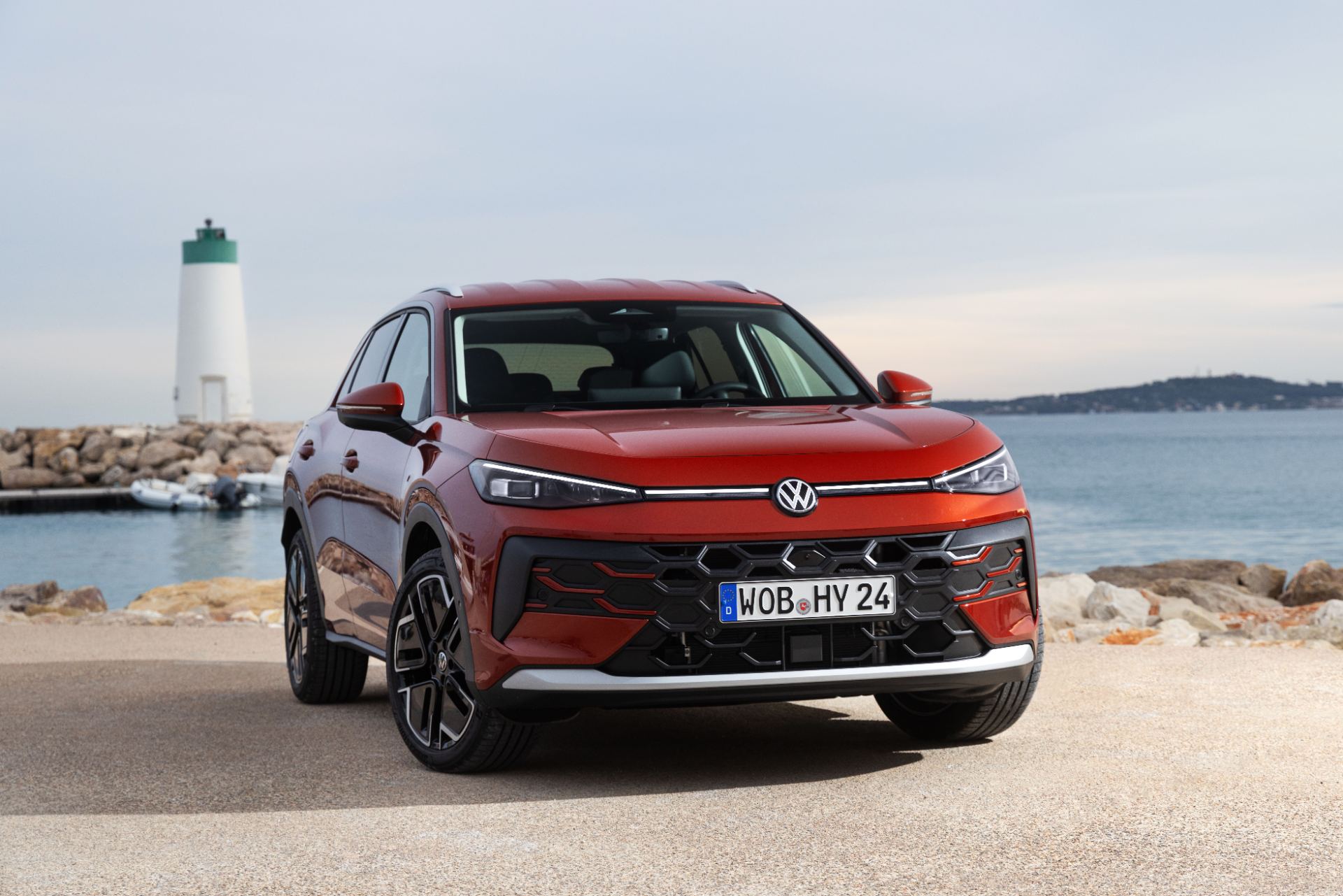
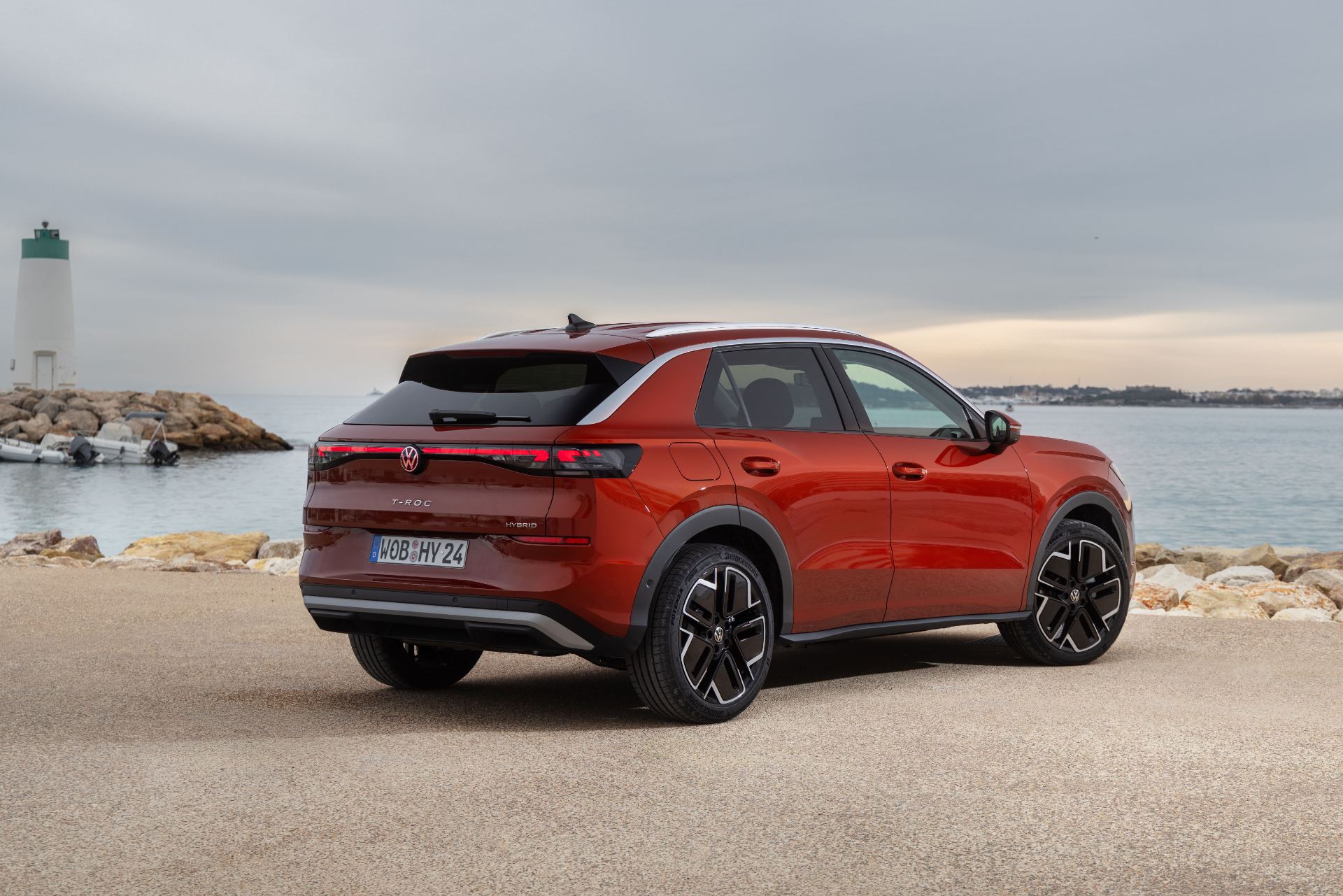
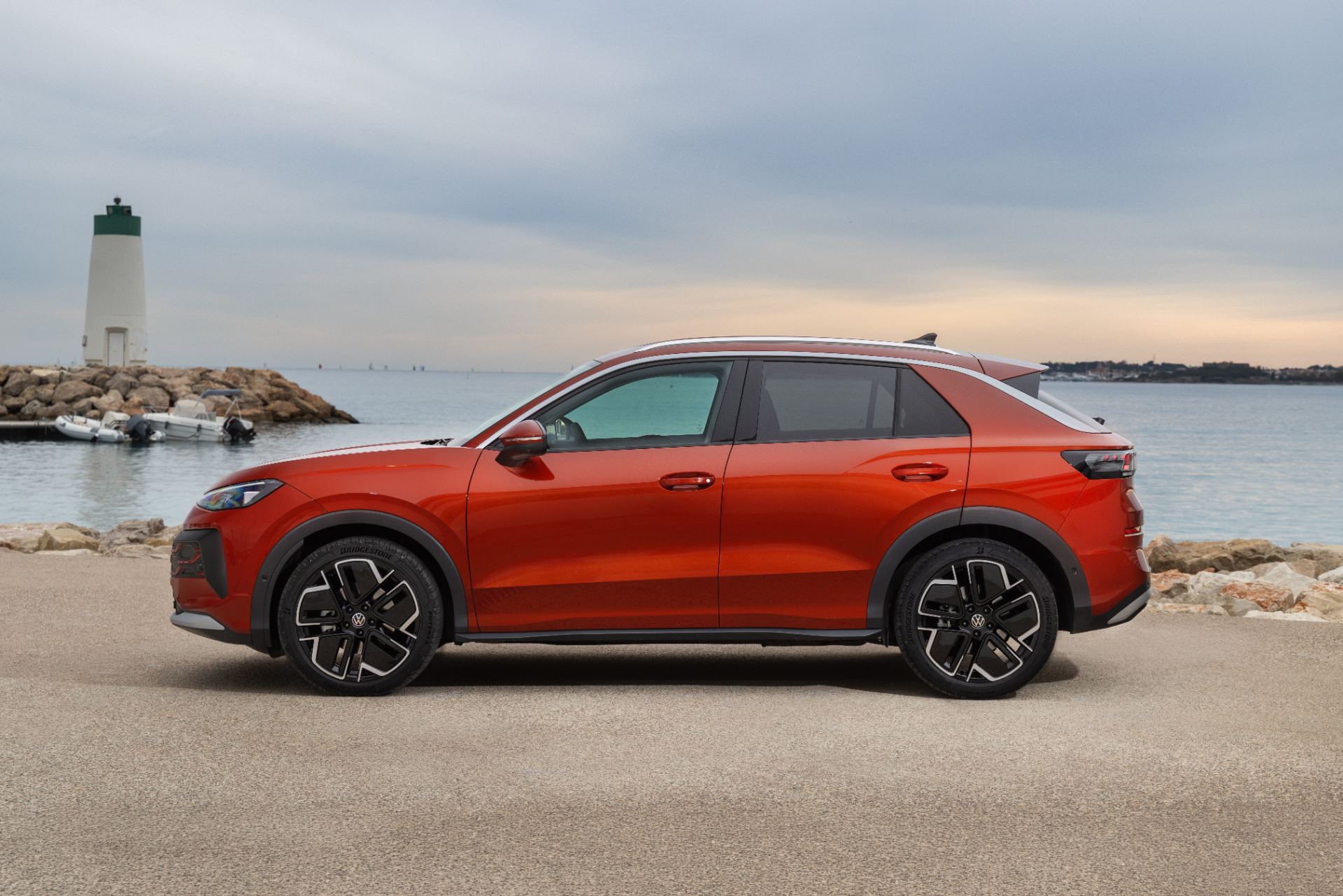
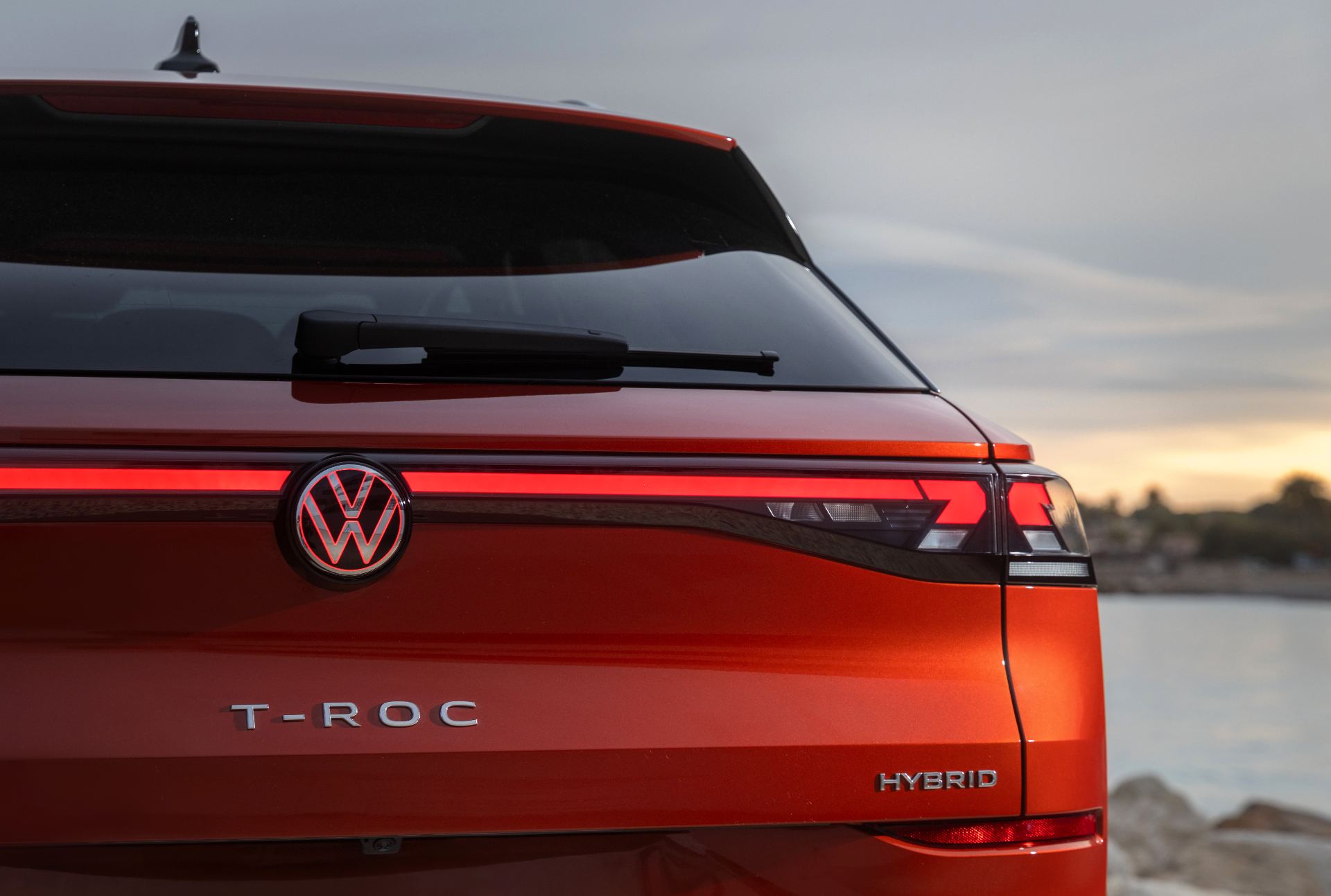
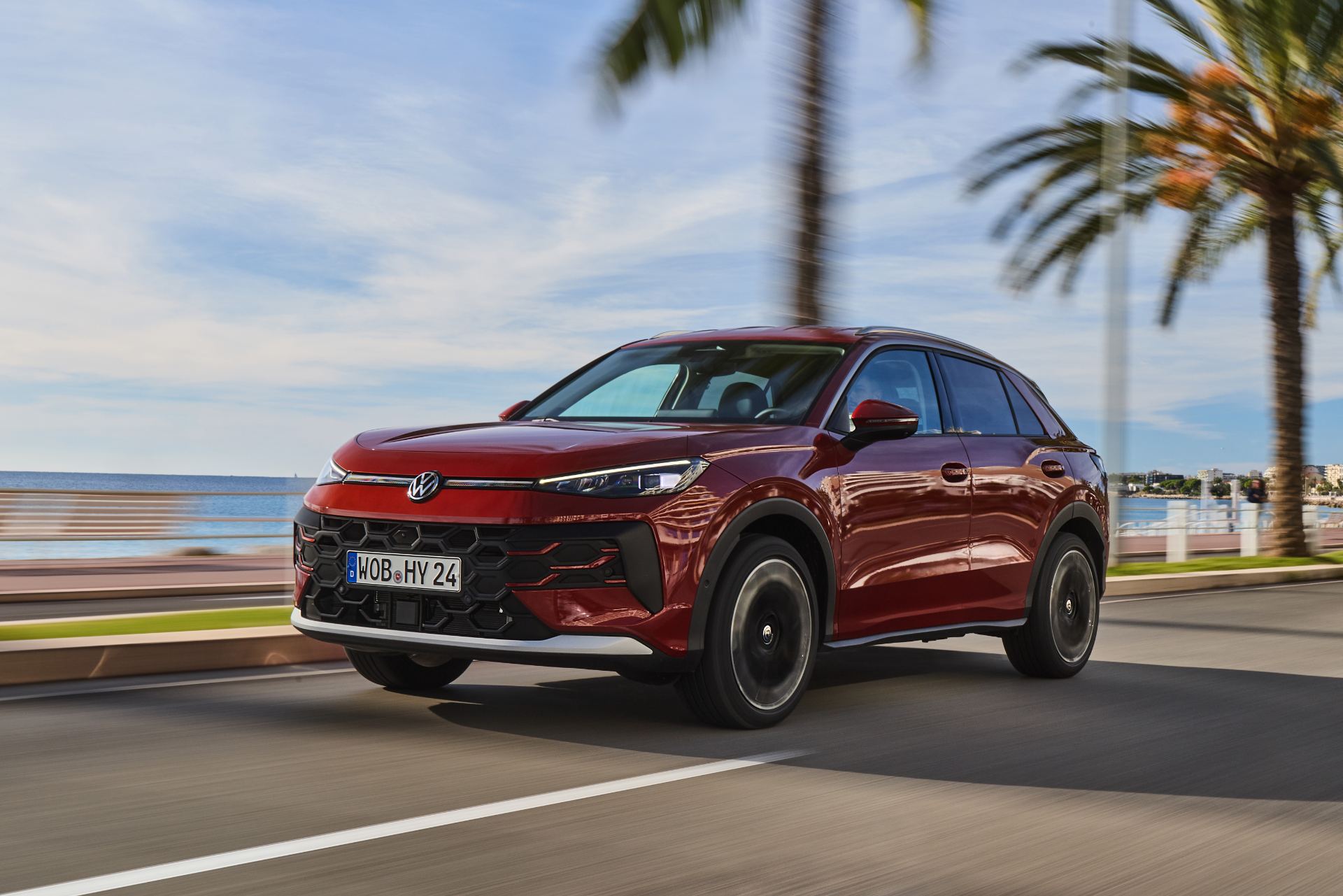
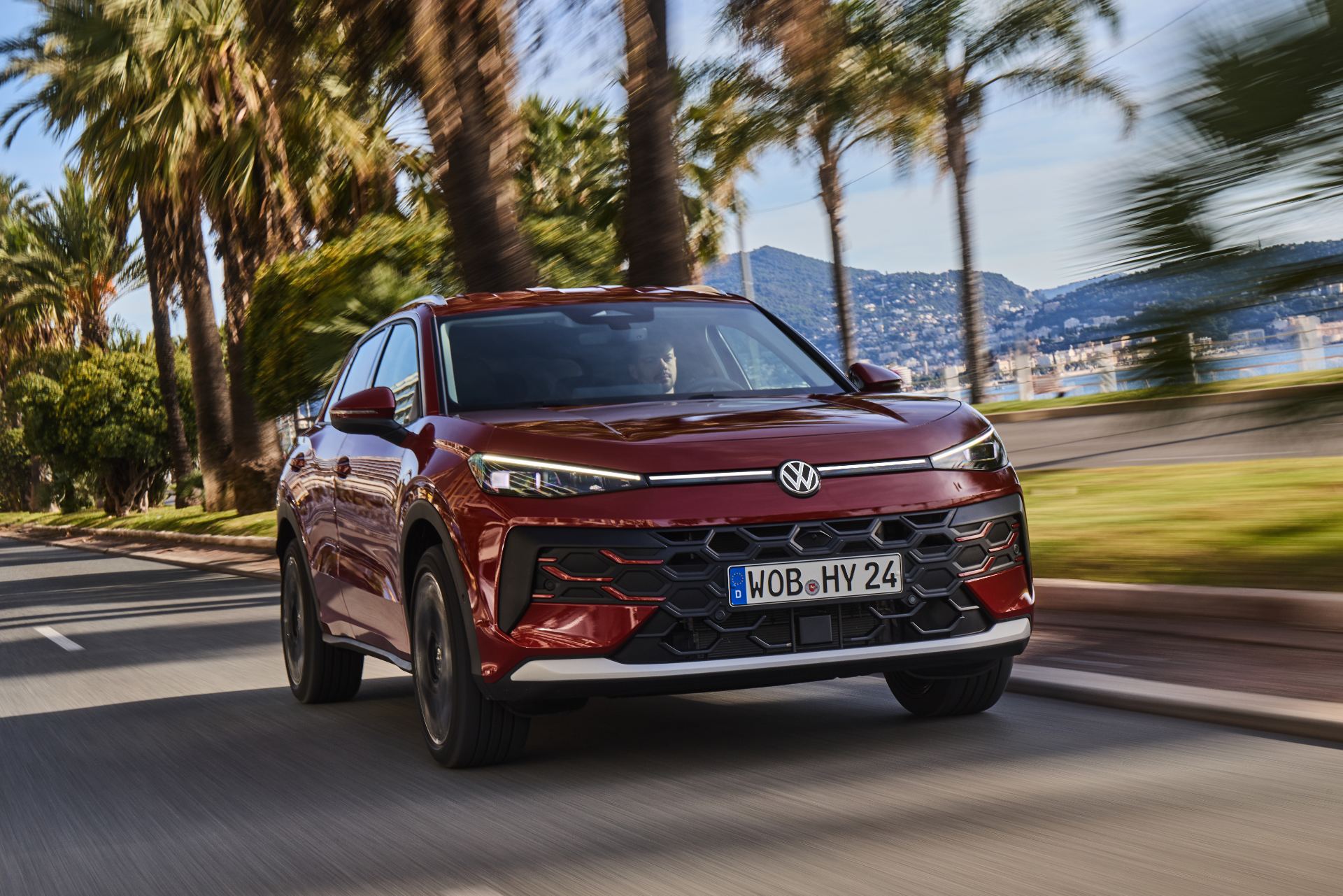
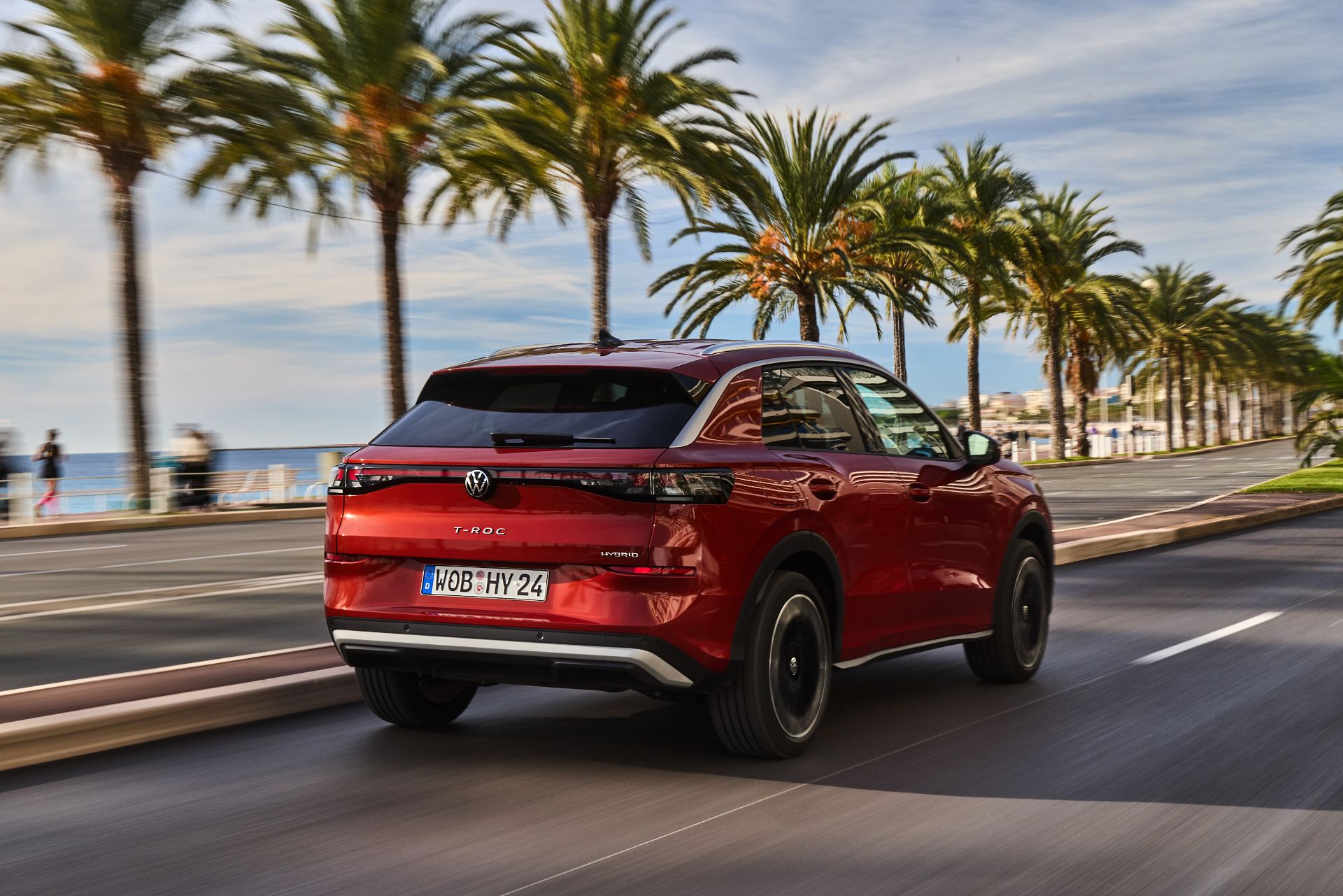
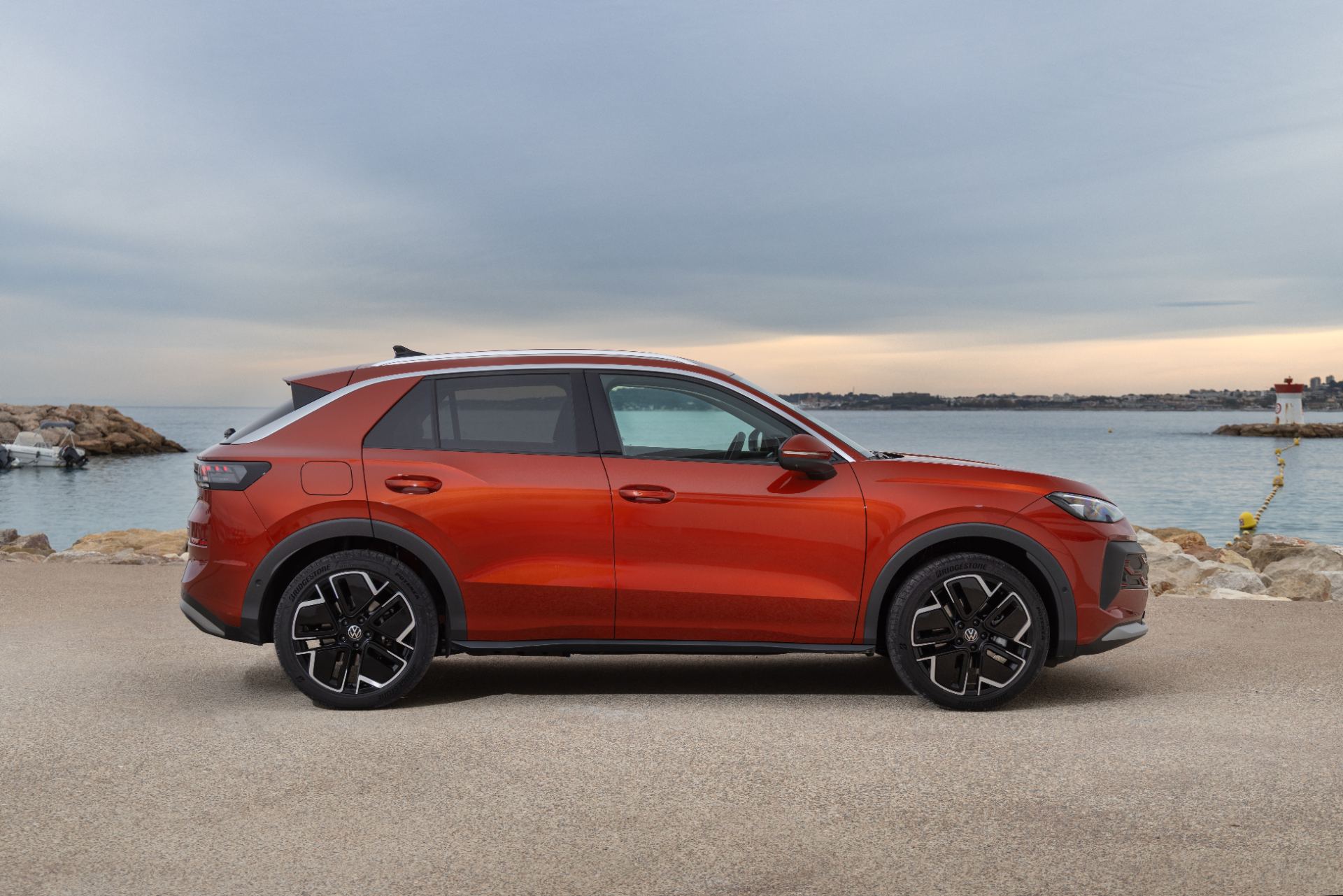
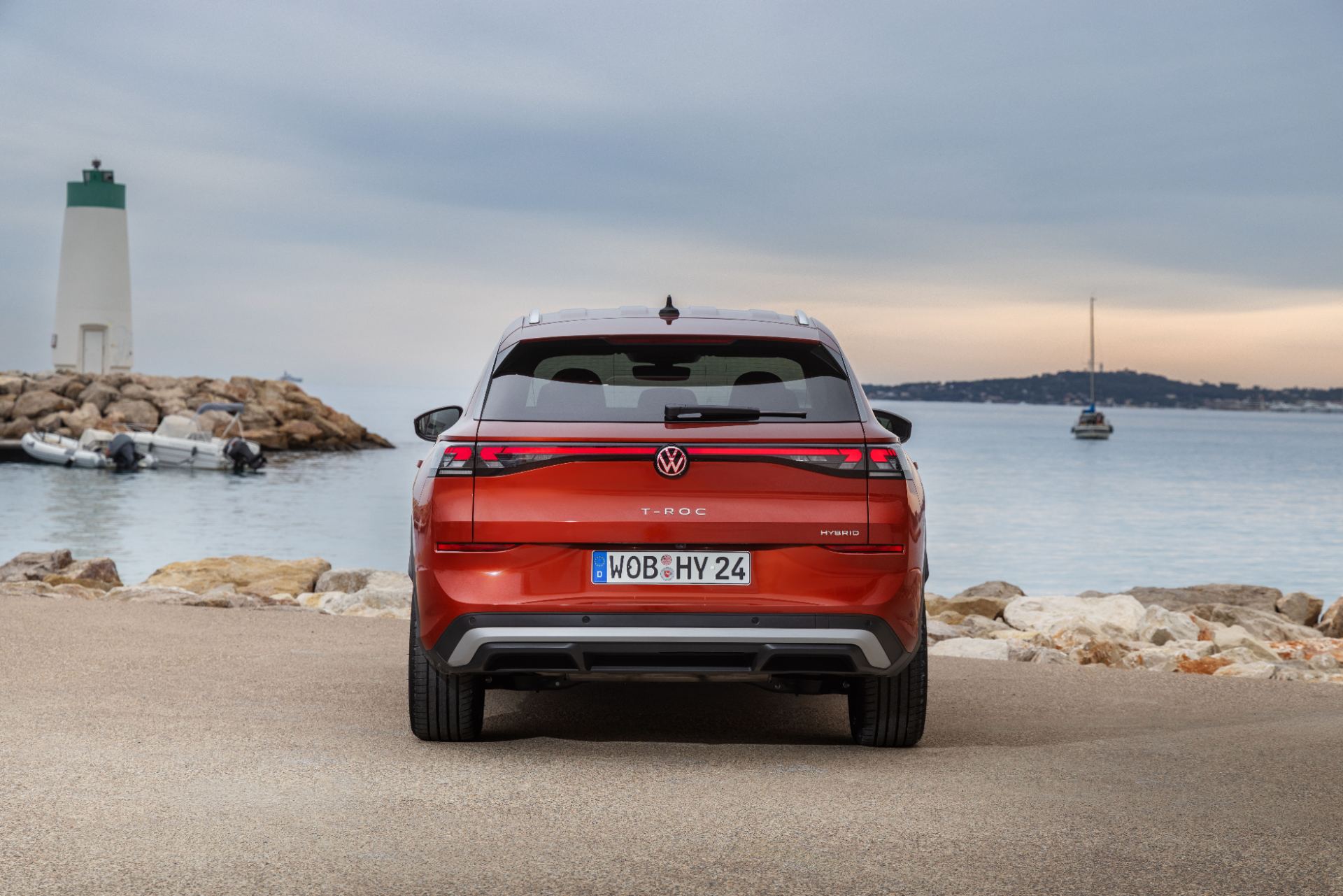
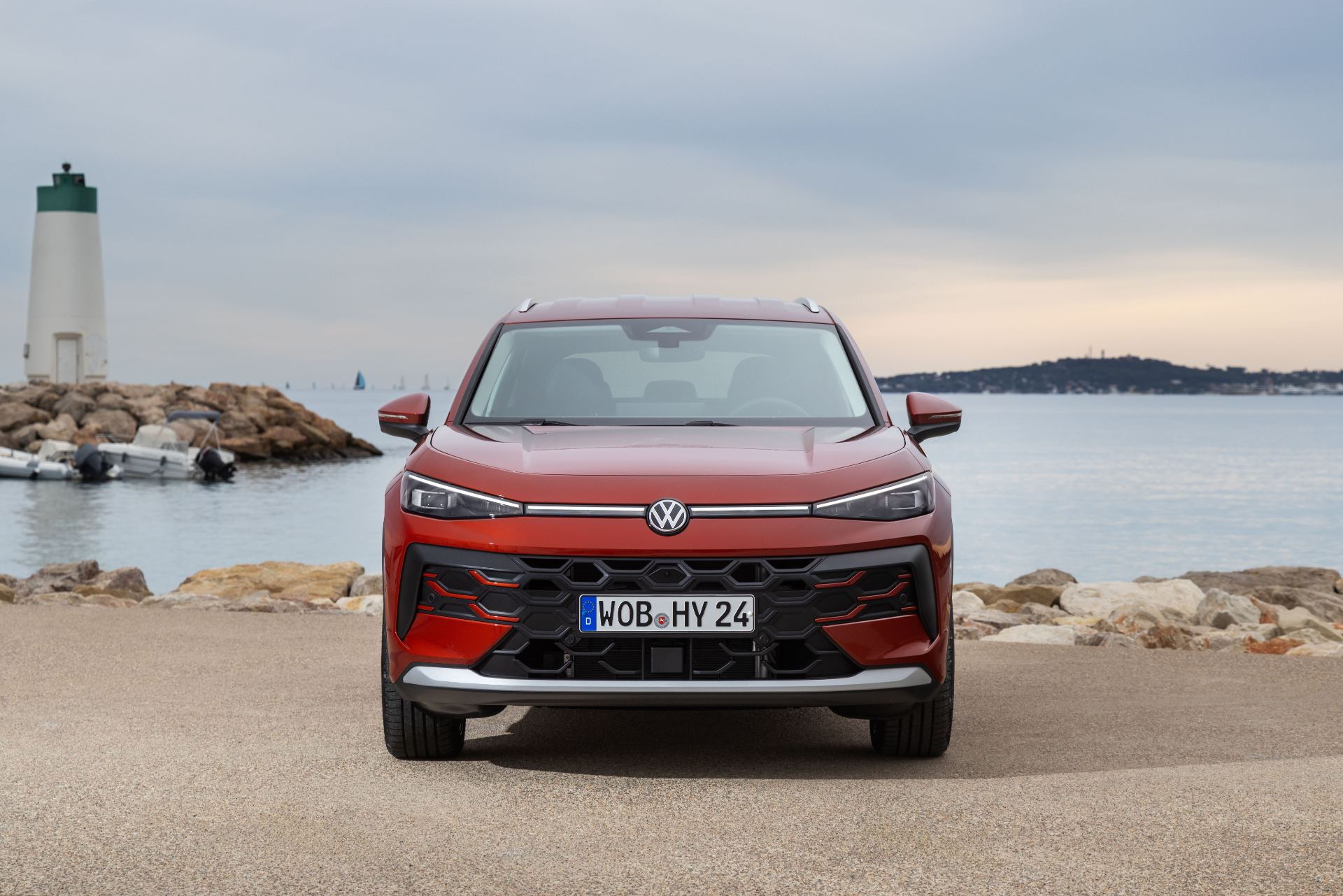
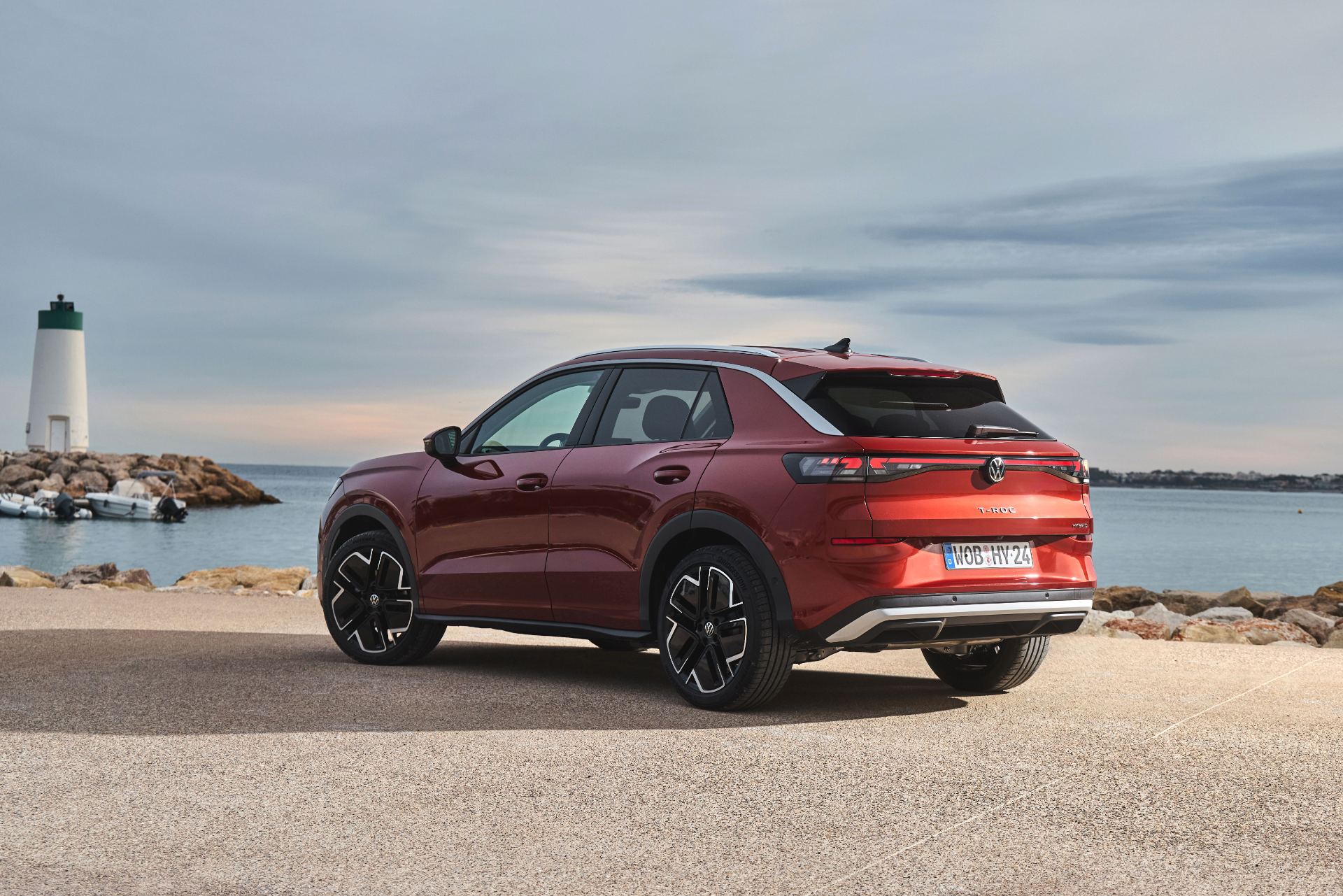
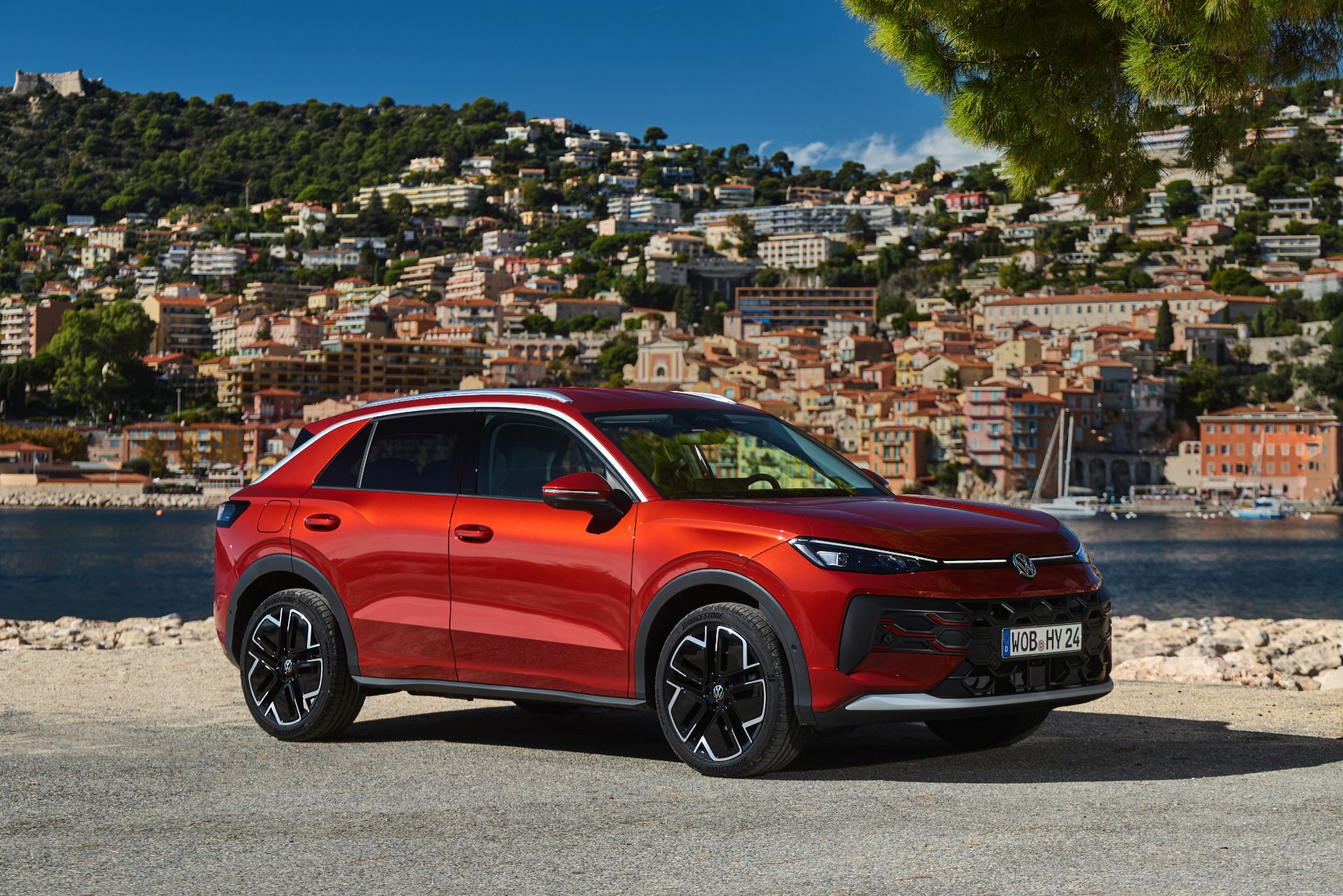
There is no bespoke hybrid styling beyond a Hybrid badge on the tailgate, so this is the second-generation T-Roc as already launched: a streamlined nose with a full-width LED light signature, distinctive bumpers and an optional illuminated Volkswagen badge that is standard on Style and R-Line. Match rides on 18-inch Torino alloys, while R-Line fits 18-inch Coventry wheels in black with a diamond-turned face and swaps in body-coloured R-Line bumpers. Volkswagen has not published a hybrid-specific paint list.
Interior and Technology
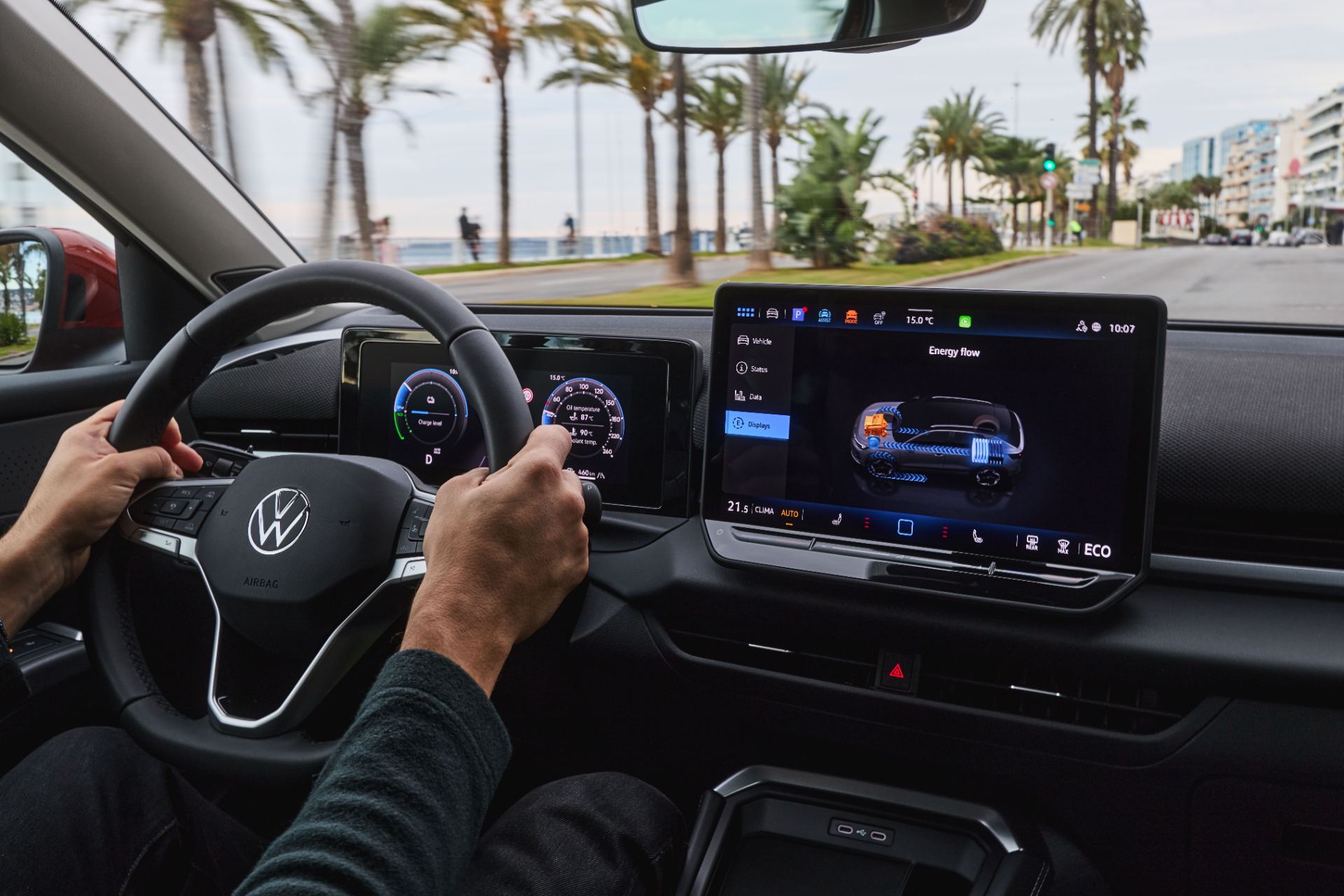
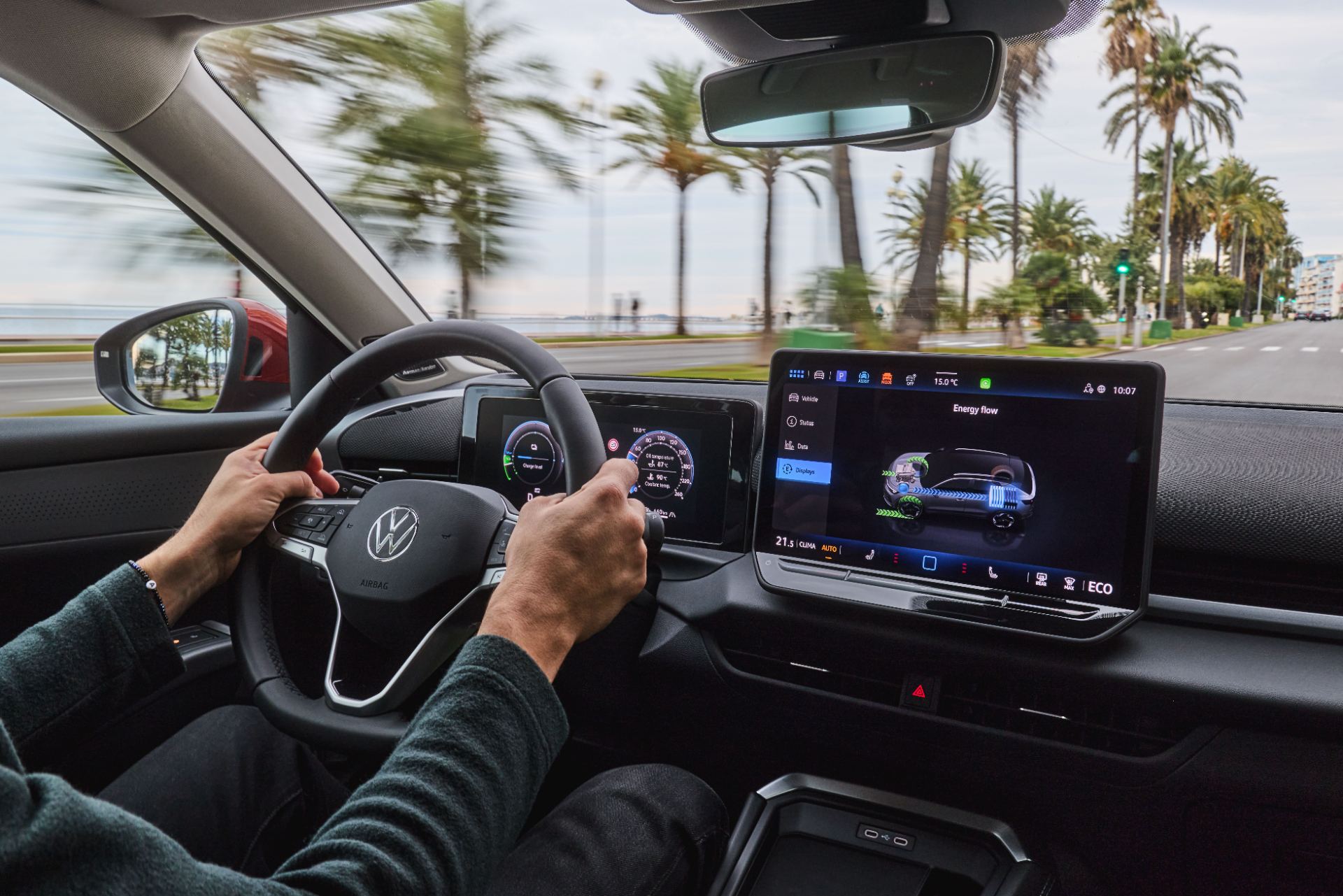
The cabin is the new T-Roc's, with a floating 12.9-inch touchscreen above the dashboard and an 8.0-inch digital cockpit behind the wheel on the hybrid range. Volkswagen describes soft materials throughout, and a driving mode control switch sits in the centre console. Navigation is standard on Style and R-Line, as is the IDA voice assistant with ChatGPT integration. The longer body pays off behind the front seats: boot volume is 475 litres, extending to a 1,534 mm load length with the rear bench folded, and a panoramic roof is optional. Because the battery sits under the rear seat rather than in the floor, there is no plug-in-style loss of boot space.
What It Means for Buyers
Volkswagen is arriving late to a class its rivals have owned for years, and it is arriving without undercutting them. At £33,725 the T-Roc Hybrid is priced as a premium mainstream choice against the Nissan Qashqai e-Power, Toyota C-HR and Renault Captur E-Tech, all of which have had self-charging hybrid systems on UK forecourts for some time. What Volkswagen offers instead is the T-Roc itself — a car that already sells in volume on badge, cabin quality and residuals — plus a single-speed hybrid transmission rather than the CVT setups that give some rivals their characteristic flaring note under acceleration. If you want to see how it stacks up on paper against other compact SUVs, browse the full catalogue.
The sharper question is internal. A £1,230 premium over the eTSI is small enough that the fuel and tax maths works for most high-mileage and company-car drivers, which makes the hybrid the sensible default rather than a niche pick. But the headline price buys base Match trim only, and anyone wanting Style or R-Line is looking at £37,890 to £40,500 — money that puts larger and plug-in hybrid alternatives, including Volkswagen's own eHybrid models, within reach. The 1.6 kWh battery should also be read for what it is: enough for brief electric running in traffic, not a substitute for a plug-in.
- ✓First full hybrid Volkswagen has sold in the UK, with no plugging in required
- ✓£1,230 premium over the equivalent eTSI mild hybrid is modest for the efficiency gain
- ✓18-inch alloys, 12.9-inch touchscreen, heated seats and adaptive cruise standard on every hybrid trim
- ✓475-litre boot unaffected by the battery, which sits under the rear bench
- ✓Single-speed hybrid gearbox avoids the CVT drone of some full-hybrid rivals
- ✕£33,725 starting price applies only to base Match trim with the 136 PS system
- ✕Volkswagen did not confirm a UK WLTP mpg or CO2 figure with the announcement
- ✕Electric-only running stops at around 37 mph
- ✕1.6 kWh battery means brief electric assistance, not plug-in hybrid capability
- ✕First deliveries not until early 2027, months after ordering
Common Questions
How much does the VW T-Roc Hybrid cost?
The Volkswagen T-Roc Hybrid starts at £33,725 on the road in the UK for the Match 136 PS. Style 136 PS is £37,890, R-Line 136 PS is £38,510, Style 170 PS is £39,980 and the range-topping R-Line 170 PS is £40,500. That places the hybrid roughly £1,230 above the equivalent 1.5 eTSI mild hybrid.
Is the T-Roc Hybrid a plug-in hybrid?
No. It is a full hybrid, often called self-charging, and it has no charging port. The 1.6 kWh battery is replenished by regenerative braking and by the petrol engine running as a generator. Buyers who want to charge from the mains and cover a meaningful electric-only distance need one of Volkswagen's eHybrid plug-in models instead.
What is the T-Roc Hybrid's mpg?
Volkswagen's official WLTP consumption is 5.5-4.9 l/100km for the 136 PS and 5.6-5.0 l/100km for the 170 PS, which converts to roughly 51-58 mpg and 50-57 mpg. CO2 is quoted at 127-115 g/km for the 170 PS version. A flat 55.4 mpg figure has circulated in UK coverage, but Volkswagen did not confirm a UK WLTP number in its announcement.
How fast is the T-Roc Hybrid?
The 136 PS version covers 0-62mph in 9.7 seconds and the 170 PS version in 8.5 seconds. Both are electronically limited to 112 mph. The car will run on its electric motor alone up to around 37 mph, after which the petrol engine takes over as the primary source of drive.
T-Roc Hybrid vs T-Roc eTSI — which should you buy?
The hybrid costs about £1,230 more than the eTSI mild hybrid and returns better economy with lower CO2, which also means a cheaper benefit-in-kind band for company-car drivers. On high annual mileage or a salary-sacrifice deal the hybrid is the stronger case. On low mileage, paid for outright, the eTSI remains the cheaper car to buy and the gap may never be recovered.
Order books for the Volkswagen T-Roc Hybrid are open now through Volkswagen UK retailers, with first customer cars arriving in early 2027. The same full hybrid system is also confirmed for the Golf, so expect a second, closely related UK price list before long.